
The Great Goddess was neither beautiful nor sweet. Or rather, she was not only that.
She was not a single figure, but many. She was maiden, mother and crone. She was not merely modest nor vain.
She was life and death at once. Spring and Winter. Water and Fire.
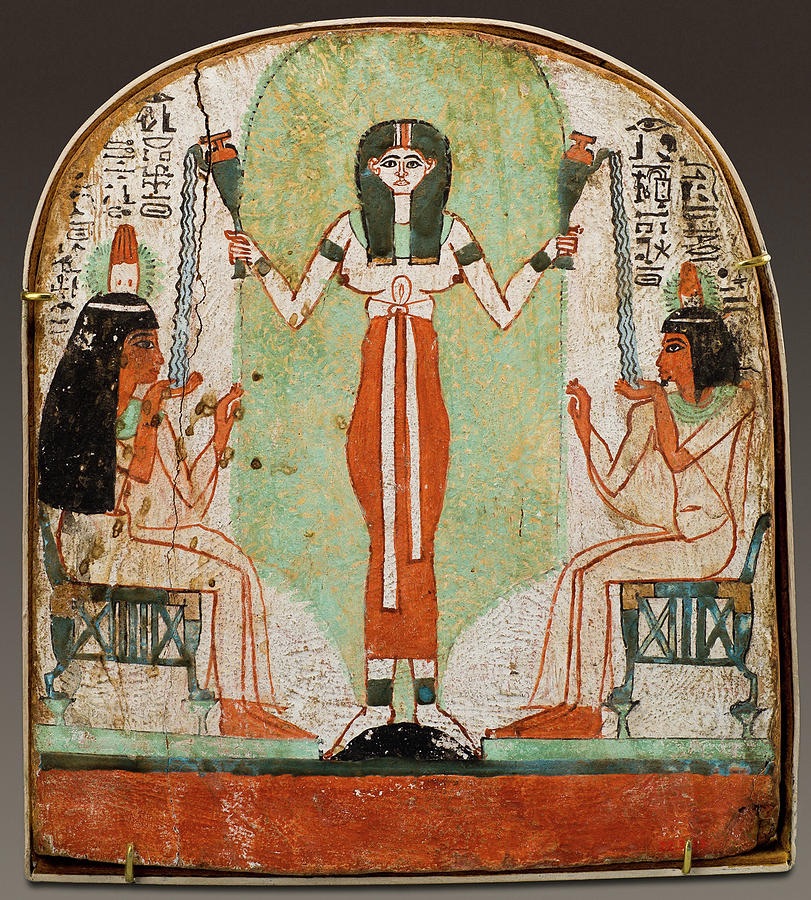
Stela of Tjanetdinetiset and Djedbastet
ca. 945–721 BCE
By the time Venus emerged in the Greek and Roman world, the ancient Great Goddess had long since faded into memory. Only fragments of her survived, scattered among different deities, each preserving a few characteristics of that primordial mother of the elements.
Standing before The Birth of Venus at the Gallerie degli Uffizi, there seemed little reason to search for those ancient traces. There she stood, as beautiful as any woman could ever be, surrounded by drifting roses, embraced by the wind and sea foam, her honey-coloured hair flowing effortlessly around her.
Yet myths remain alive only as long as our imagination allows them to. And sooner or later, the questions arise.
Is this truly all that remains?
The goddess of beauty and love?

Of course, there are also Minerva and Juno. But who remembers them in quite the same way? Venus inherited the greatest power of all: love.
Then, a few months ago, my mother and I travelled to Milan during Design Week. After visiting the spectacular installations of the great luxury maisons, we sought the quiet atmosphere of the Pinacoteca di Brera.
And there it was.
A little away from the museum’s main route hung an unexpected painting: Venere nella Fucina di Vulcano by Bernardino Luini.
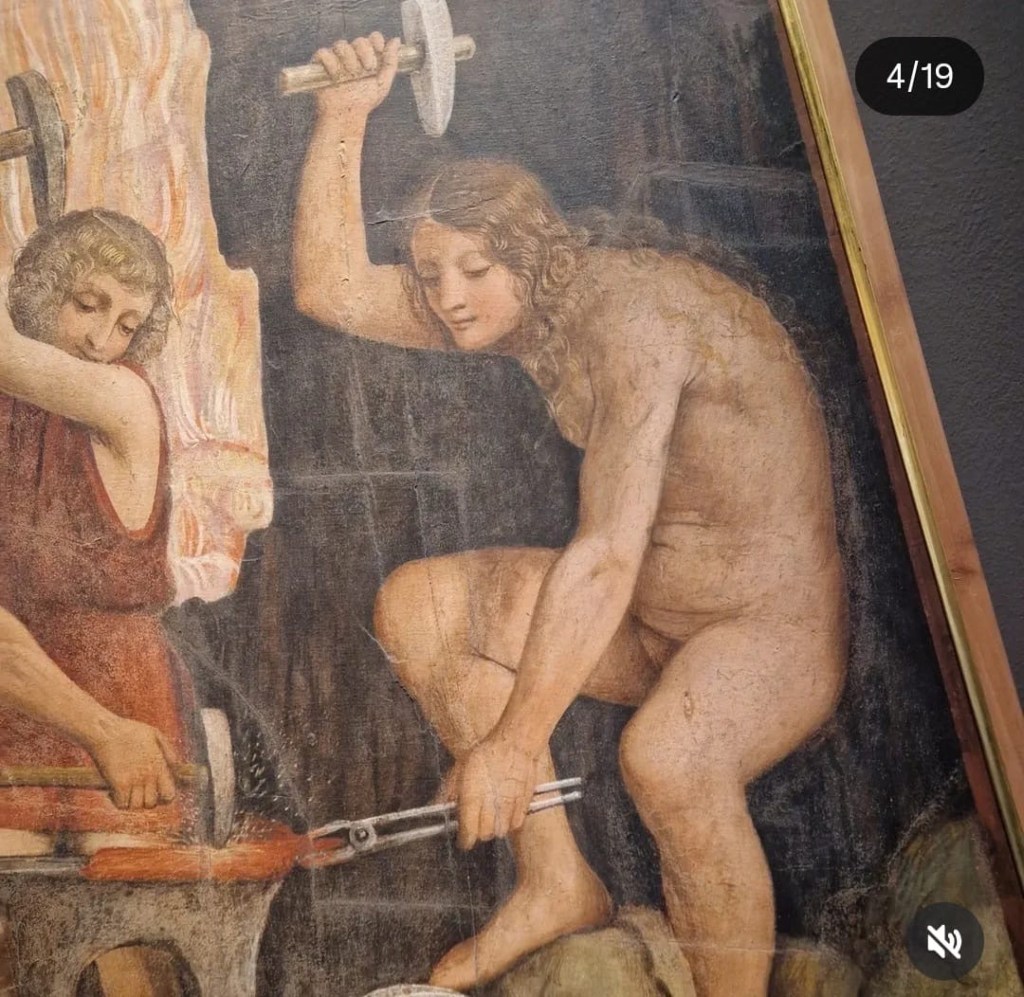
I had almost forgotten that Venus was Vulcan’s wife, though mythology remembers her more readily for her love affair with Mars. Was she forging Achilles’ armour in her husband’s workshop? Or perhaps an armour of her own?
It hardly mattered.
What mattered was the woman before us.
She was entirely different from Botticelli’s Venus.
Still naked, yet without fragility.
Bent over the anvil, absorbed in her work, shaping metal in fire.
At that very moment, we knew.
It was time to rethread the myth.
To return all four elements to the Goddess.
Not only water and air, but also earth and fire.
Not only beauty and softness, but determination and strength.
Not only creation and nurturing, but also destruction.
The cycles of nature.
The cycles of life.
The Great Goddess.
Why Venus?
Because she is the goddess who speaks to us most deeply.
Love is perhaps the only force we believe to be indestructible. Yet love itself belongs to nature: it changes, transforms, fades, returns and begins again.
Venus became our goddess—not exactly as history remembers her, but as we imagine she may once have been: a figure who still carried echoes of the ancient Mother Goddess and the balance of all four elements.
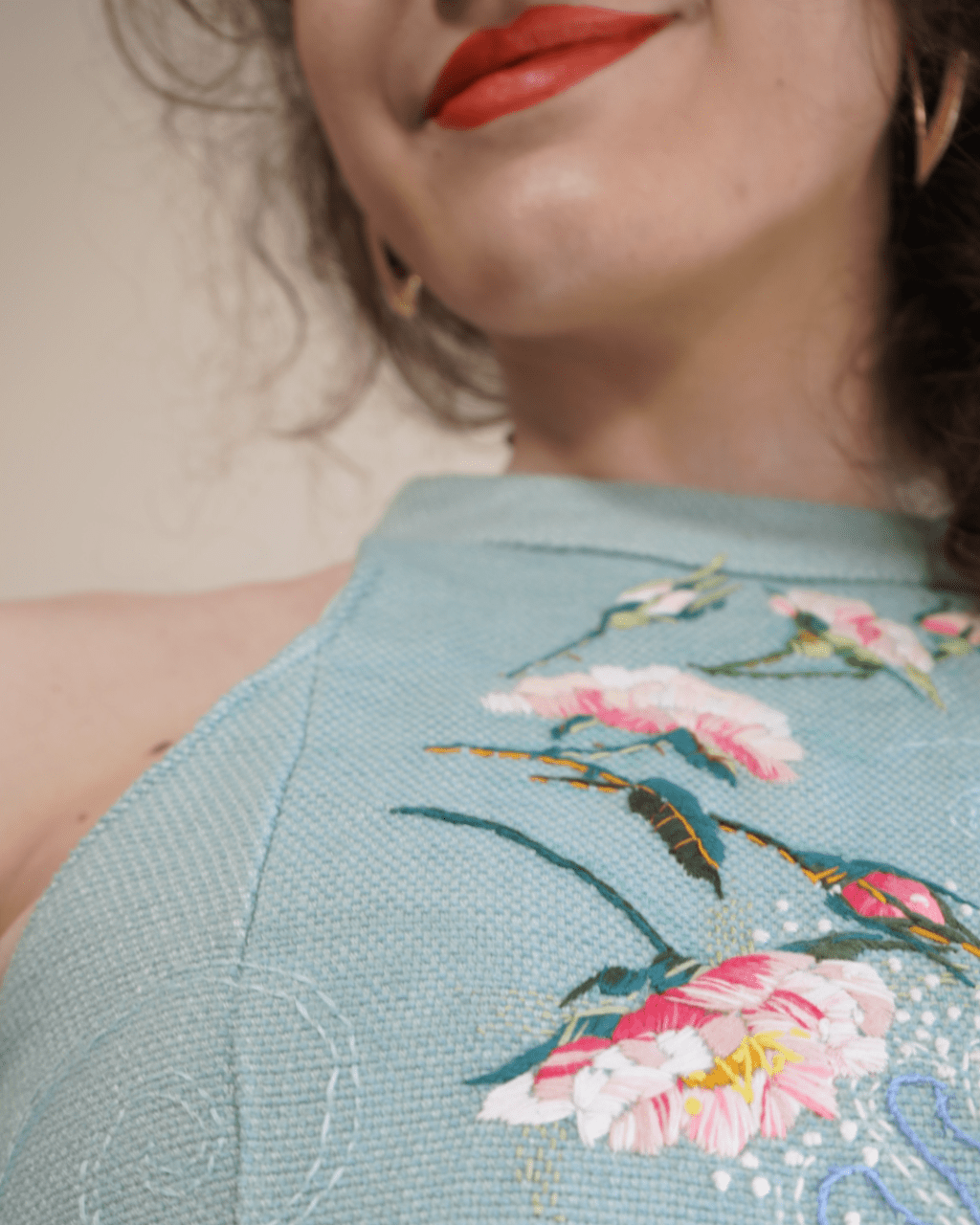
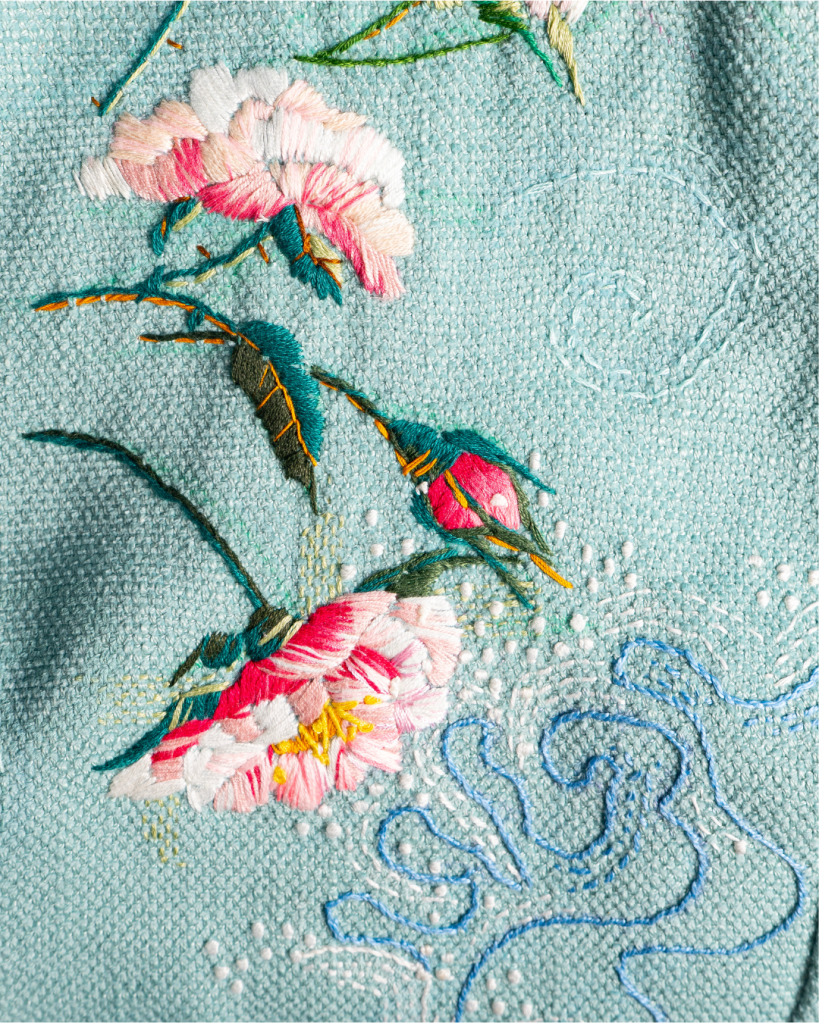
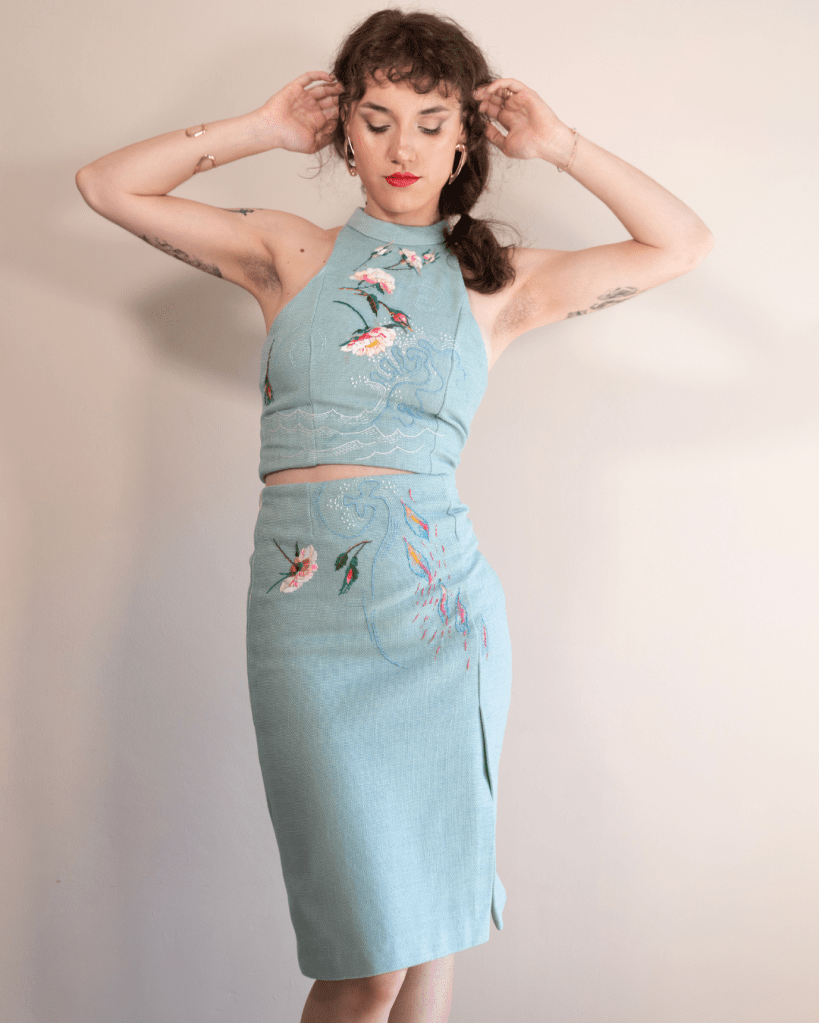
Creating Venus, Rethreaded took more than two weeks of continuous embroidery.
The garment itself became a symbolic journey.
From the roses, sea foam and currents of air embroidered across the bodice, the eye slowly descends toward sparks and flames rising from the skirt, reconnecting water and fire within the same figure.
The silhouette had to remain understated and timeless.
The vintage garment itself was never meant to disappear beneath the embroidery; instead, its original warp and weft were intended to become part of the story, allowing the stitches to emerge as though they had always belonged there.
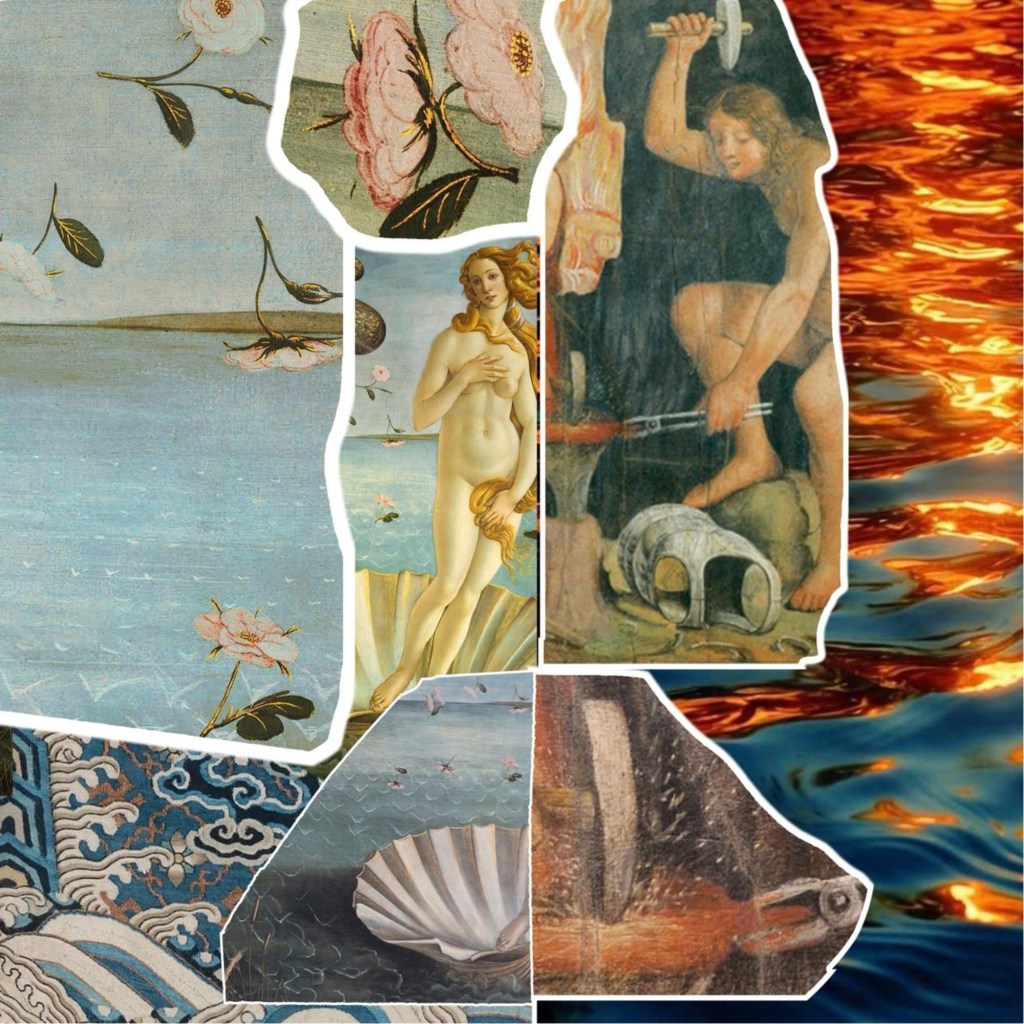
The roses draw inspiration from Botticelli.
The flowing waters recall the wave motifs found on traditional Japanese kimonos.
The sparks and flames are entirely our own symbolic language.
And so, thread by thread, Venus took shape.
Venus, Rethreaded.

 Telling Roses
Leave a comment