
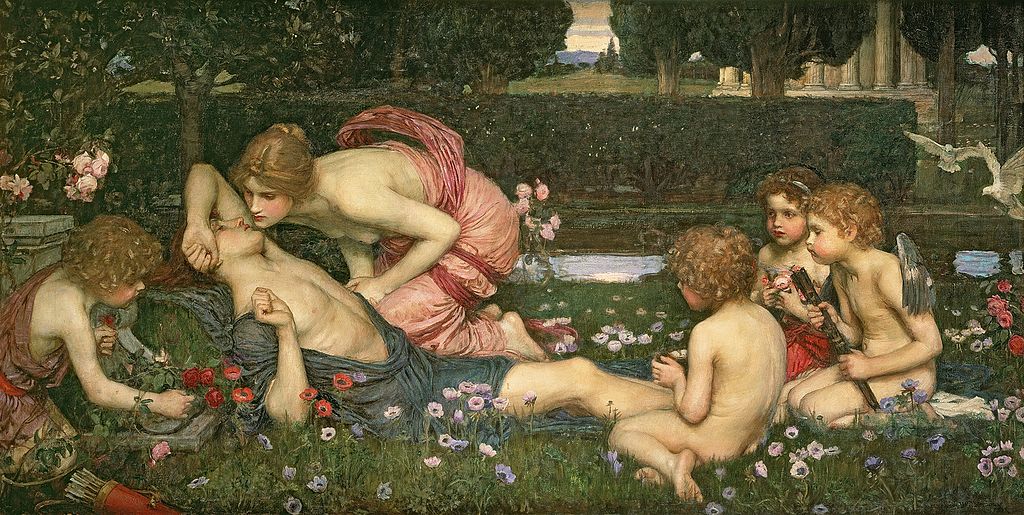
“Rose-cheek’d Adonis hied him to the chase;
Hunting he loved, but love he laughed to scorn.”
— William Shakespeare, Venus and Adonis
In Shakespeare’s Venus and Adonis, two opposite natures meet.
On one side stands Venus, Queen of Love herself, whose very nature is to love. On the other is Adonis, a beautiful young mortal whose only passion is the hunt. While Venus burns with desire, Adonis laughs at love.
Unrequited love lies at the heart of Shakespeare’s poem. Venus falls hopelessly in love with the beautiful young hunter, whom she describes as “thrice fairer than myself”—more beautiful even than herself, the goddess of beauty.
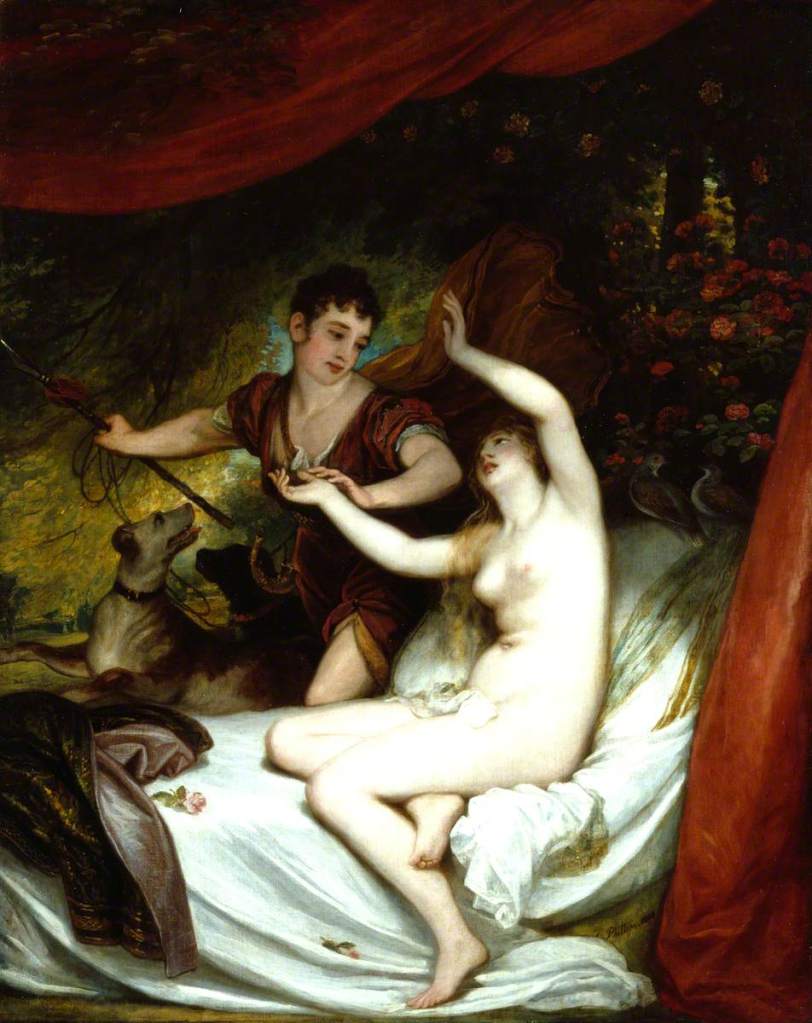
At the very sight of him, she longs to “pluck him from his horse.” Throughout the poem, Shakespeare fills his verses with flowers and floral imagery. Like a blossom waiting to be gathered, Adonis appears to Venus at the very peak of his beauty. Yet he is still only a bud: too young, too unripe and too uninterested in love to be plucked.
Venus, however, burns with a passion as fierce as fire. She even boasts that she once conquered Mars, the god of war, “leading him prisoner in a red rose chain.” If Love itself could overcome War, surely the heart of a beautiful young hunter cannot remain unconquered.
Shakespeare’s version is strikingly different from many later retellings of the myth. Rather than portraying a tragic love between a goddess and a doomed mortal, he presents an almost comic reversal: an insistent Venus relentlessly pursuing a young man who cares for nothing but hunting. The impossibility of their love lies not in the difference between mortal and divine, but in Adonis’ complete rejection of love itself.
Still, Venus refuses to surrender. She warns him:
“Fair flowers that are not gather’d in their prime
Rot, and consume themselves in little time.”
To her, Adonis has reached the perfect moment to bloom. Beauty is fleeting, youth cannot be preserved, and love delayed may never come again.
Desperate to win him over, Venus even pretends to die, hoping compassion will draw him closer. Adonis revives her with kisses, yet his heart remains untouched. Before long, he breaks free to pursue what truly calls him—not love, but the hunt of a wild boar.
After his foretold death, Shakespeare follows Ovid’s ancient tradition:
“And in his blood that on the ground lay spill’d,
A purple flower sprung up, chequer’d with white.”
From Adonis’ blood springs a purple flower streaked with white, preserving the colours of his pale cheeks and the blood that stained them.
In the much older “Lament for Adonis”, Bione di Smirne clearly refers to the Rose as springing from Adone´s blood:
The Paphian’s tears flow, likewise the blood of Adonis,
And the earth blooms beneath the blood and the tears.
Roses spring from the blood, anemones from the tears.
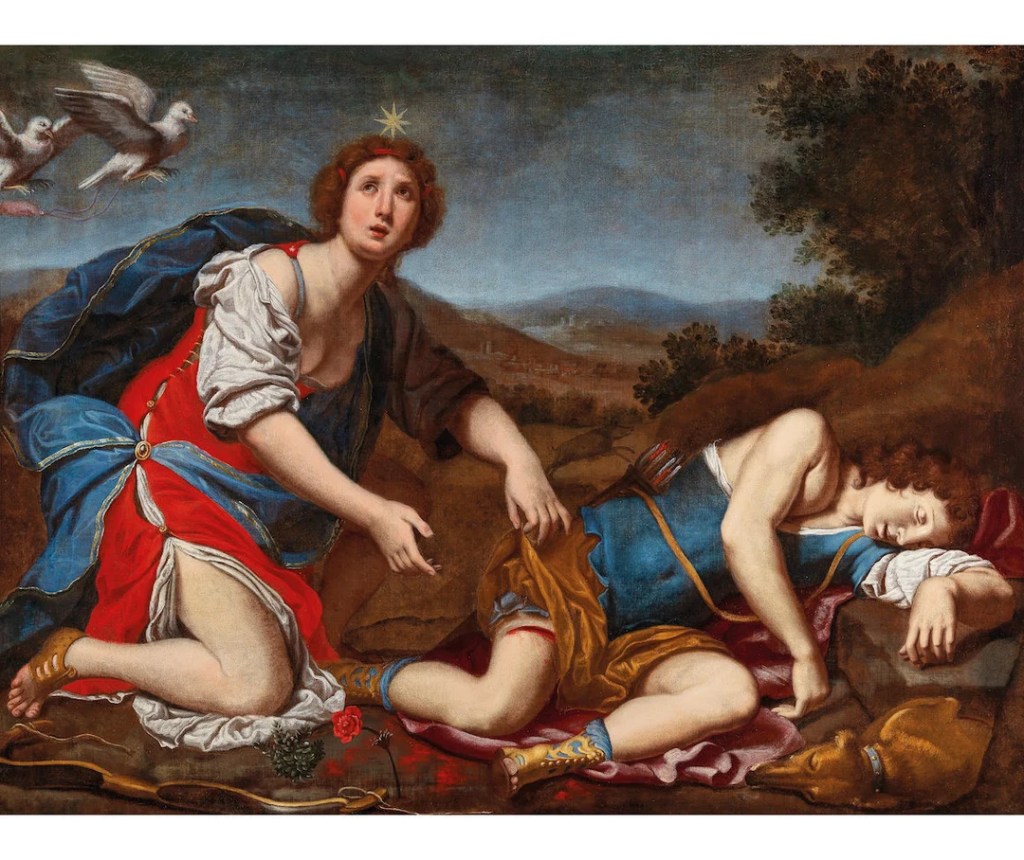
At Telling Roses, we chose to reinterpret, through the ancient art of hand embroidery, the myth by portraying the flower most closely associated with Venus herself: the rose.
Our Venus & Adonis symbolic rose preserves the purity of its white petals while gradually becoming stained with crimson. It embodies the dual nature of love—its bliss and its pain, its glory and its loss.
The embroidery was developed almost instinctively. Crimson petals, echoing drops of blood, fall upon a white rose whose petals slowly become tinged with red.
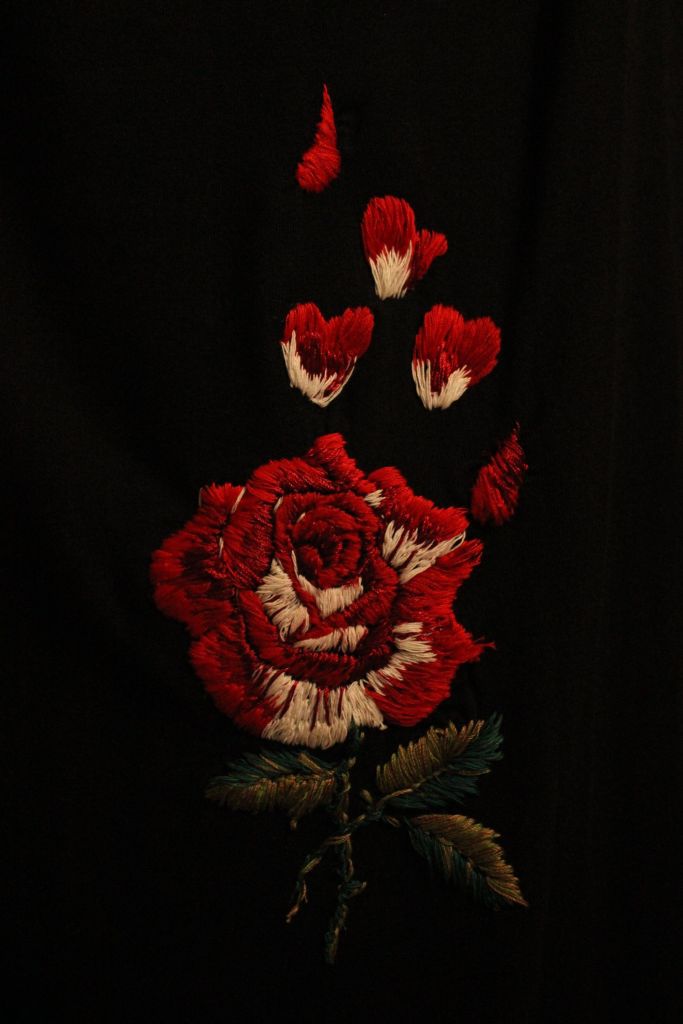
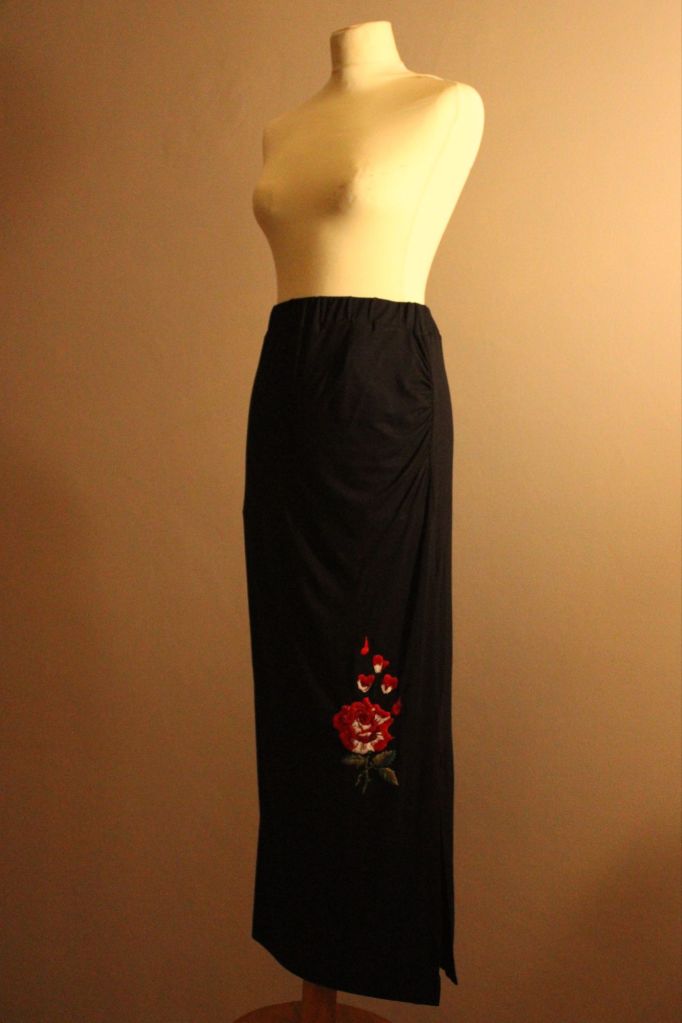
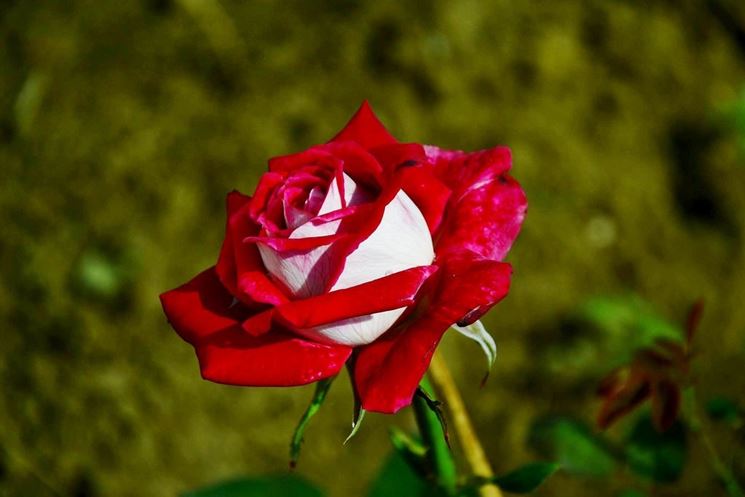
For the visual appearance of the rose, we also drew inspiration from the rare Osiria rose, famous for its striking red and white bicoloured petals. The variety is also mentioned in one of our favourite novels, The Book of Magic by Alice Hoffman, adding another thread to the tapestry of inspirations behind the collection.
The symbolism of the red rose has taken many different meanings across cultures, legends and centuries. What we chose to embroider into our Venus & Adonis collection is our own interpretation.
This symbolic rose is meant to be worn whenever we need to remember that love is never one thing alone. It is joy and sorrow, fulfilment and longing, blessing and wound. It may last forever or disappear far too soon.
Whatever form it takes, love leaves its mark.
Like crimson staining white petals, it colours the otherwise blank canvas of our lives. Some loves become memories, others become scars, but none leave us unchanged.
Love is never only white or only red.
Like our symbolic rose, it carries both colours at once.


Leave a Reply