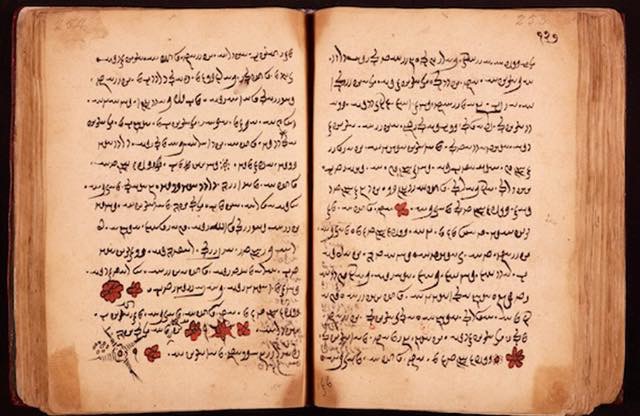
Gatha songs Avesta
How old is rose symbolism, anyway? This is my opening question today—and, ultimately, the central focus of this blog: tracing rose symbolism across ages, cultures, myths, and legends.
If roses, according to paleobotany, are 35 million years old, how ancient are the stories in which roses play a central and meaningful role?
The Rose in the Zoroastrian Cosmology
The answer may surprise you. One of the oldest known symbolic references to roses comes from Zoroastrian cosmology. In the Bundahishn, a Middle Persian text compiled around the 9th century CE (drawing from much older Avestan oral traditions), we find one of the earliest mythological explanations of the rose.
According to this cosmological text, thorns appeared on the rose the moment Evil (Ahriman) entered the world. Thorns represent the corruption of an originally perfect creation. If evil signifies pain or hardship, then the rose becomes a symbol of duality: beauty and suffering, innocence and danger.
In this sense, the Rose emerges as a perfect and complete representation not just of love, but of life itself—both beautiful and painful.
This meaning endures over time.
The Rose in Ancient Persian Poetry
Fast forward to the 11th–12th century, and we find the rose once again in the spotlight—this time in the hands of Persian poet Omar Khayyam, in his famous Rubāʿiyāt:
“Be happy in this very moment. This very moment is your life.”
These words feel astonishingly modern for a man who lived nearly a thousand years ago. Khayyam’s poetry doesn’t just celebrate life—it also offers one of the earliest poetic interpretations of red rose symbolism.
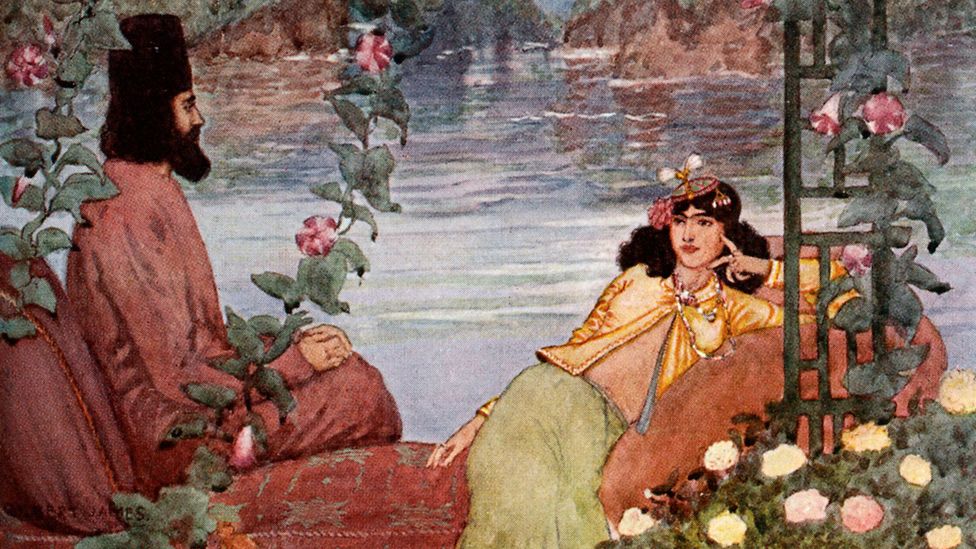
In one verse, the nightingale, madly in love with the rose, leans so close that he is pricked by a thorn. His blood turns the white rose red. The message? Love can hurt.
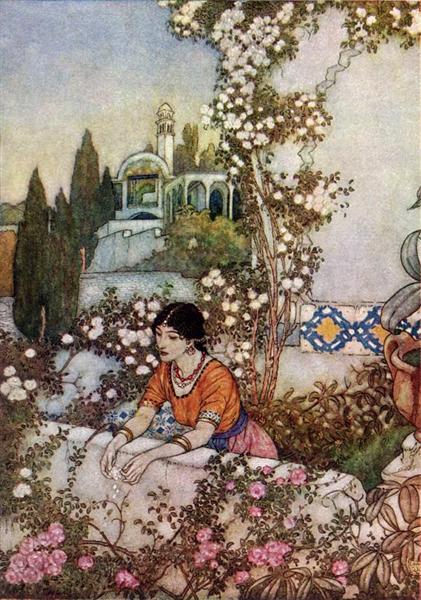
Sound familiar? That’s because this symbolic link between love and pain continues across cultures and mythologies. We’ve already explored the Greco-Roman myth of Venus and Adonis, where the red rose is born from the blood of a dying lover—or of Venus herself, depending on the version.
Whether it’s the blood of a bird or a goddess, the symbolism remains: beauty and pain often coexist. And so we return to Khayyam’s core message—live in the moment. Risk love. Accept the thorns. Create beauty anyway.
The rose, again, isn’t just a symbol of love—it’s the ultimate symbol of life: complex, contradictory, full of beauty and full of danger.
And this is the story we want to keep telling.
Telling Roses. Now also on Instagram!


 Telling Roses
Leave a reply to Telling Roses Cancel reply