Symbolic roses, alchemical roses, archetypal roses:
the rose unfolds into countless meanings. Across cultures and disciplines, its symbolism shifts, overlaps, evolves, and is continually reinterpreted.
Here, we focus on the alchemical Rose.
Or rather: on alchemical Roses.
What is Alchemy?
Let us take a step back.
Without claiming expertise, we can describe it in simple yet essential terms:
in alchemy, Matter and Spirit are one unified reality. Through a process of transformation — chemical, symbolic, and intentional — carried out by the alchemist, matter and spirit evolve together, ideally toward perfection.
From lead to gold.
From chaos to harmony.
The Rose in Hermetic Philosophy
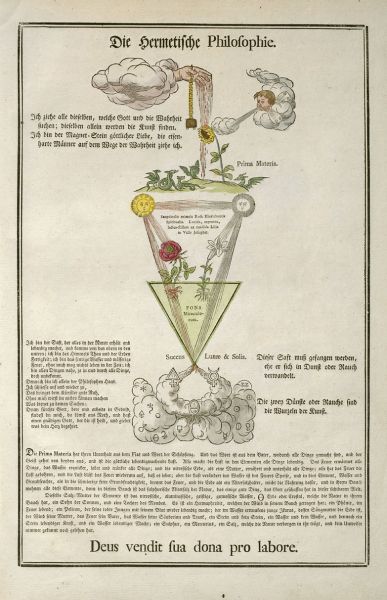
The rose becomes a central emblem of Hermetic philosophy, whose roots lie in Hellenistic Egypt and which later unfolds through Arabic and Western traditions, crossing centuries and schools of thought.
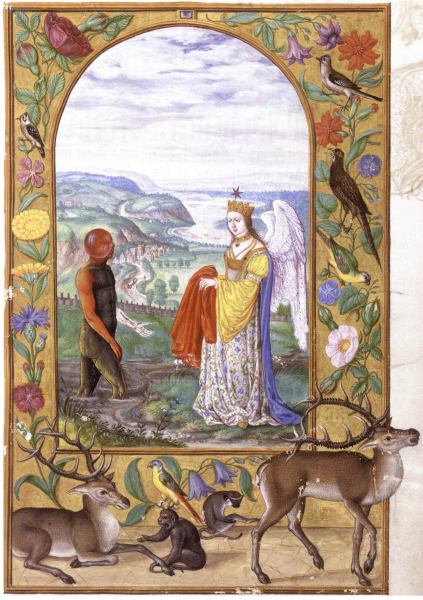
The core stages of the alchemical process are:
- Nigredo (black)
- Albedo (white)
- Rubedo (red)
From chaos, through purification, to completion.
White Rose and Red Rose
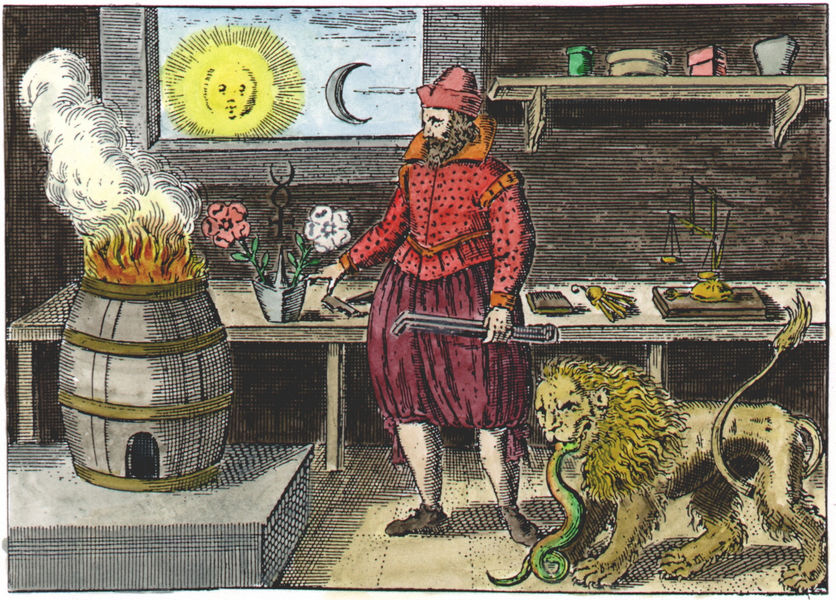
Alchemy as process, not result. (Images are copyright © Adam McLean 1999-2010)
As a symbol of perfected matter, the rose appears primarily in the phases of Albedo and Rubedo.
Interestingly — and often counterintuitively for modern sensibilities —
the White Rose represents the feminine principle, while the Red Rose is associated with the masculine principle.
Likewise:
- the Moon is feminine, the Sun masculine
- Water is feminine, Fire masculine
These are not biological categories, but energetic principles: receptive and active, containing and transforming.
The Union of Opposites
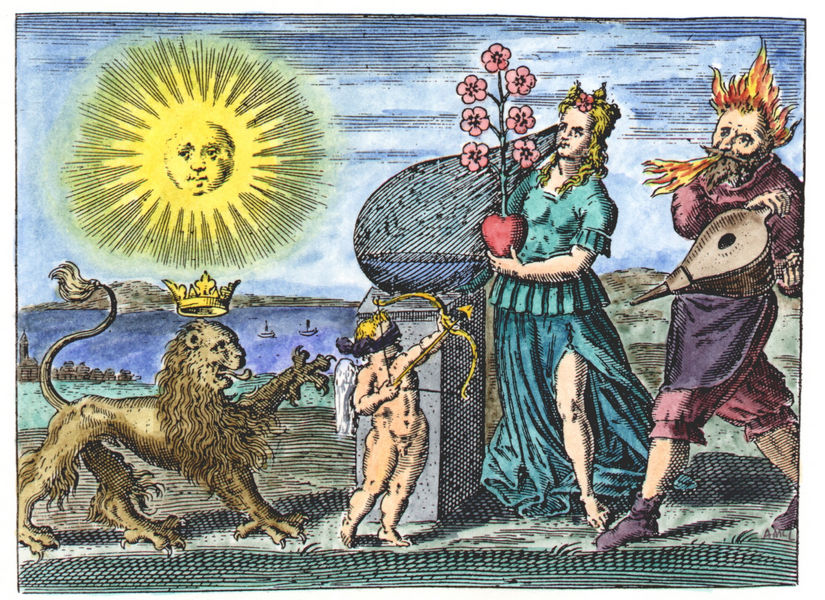
In the final phase of the work, masculine and feminine merge.
Transformation occurs when elements unite and are elevated together.
It is no coincidence that:
- the white rose, in Christian symbolism, is associated with the Virgin Mary, embodying purity as well as mercy
- the red rose is linked to passion and transformation, and thus to Christ
Alchemical Roses in Art
Alchemical roses also appear in key artistic representations:
in the Birth of Venus, rising from the waters, and in the imagery surrounding the Immaculate Conception.
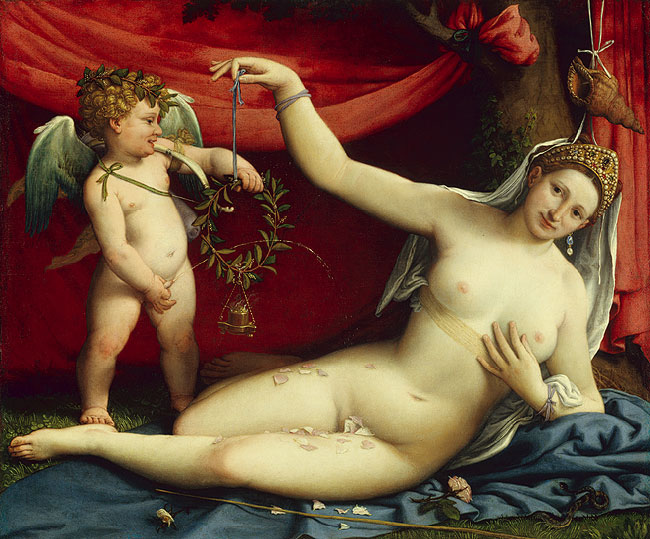
In paintings such as Venus and Cupid (c. 1550) by Lorenzo Lotto, rose petals scattered across the goddess’s body and at her feet symbolize transformation and the universal power of love — not romantic sentiment, but love as the driving force of the universe.
What Does Humanity Need?
The White Rose, symbol of purity and compassion.
And the Red Rose, principle of energy, fulfillment, and transformation.
The Rose as the Alchemical Flower
Through its colors, its form, and its intrinsic duality — petals and thorns —
the rose stands as the alchemical flower par excellence. It embodies the main stages of the alchemical process as well as its fundamental principles: feminine and masculine, matter and spirit.
Where else, if not in the rose, can we so clearly perceive the coexistence of opposites?
 Telling Roses
Leave a comment