
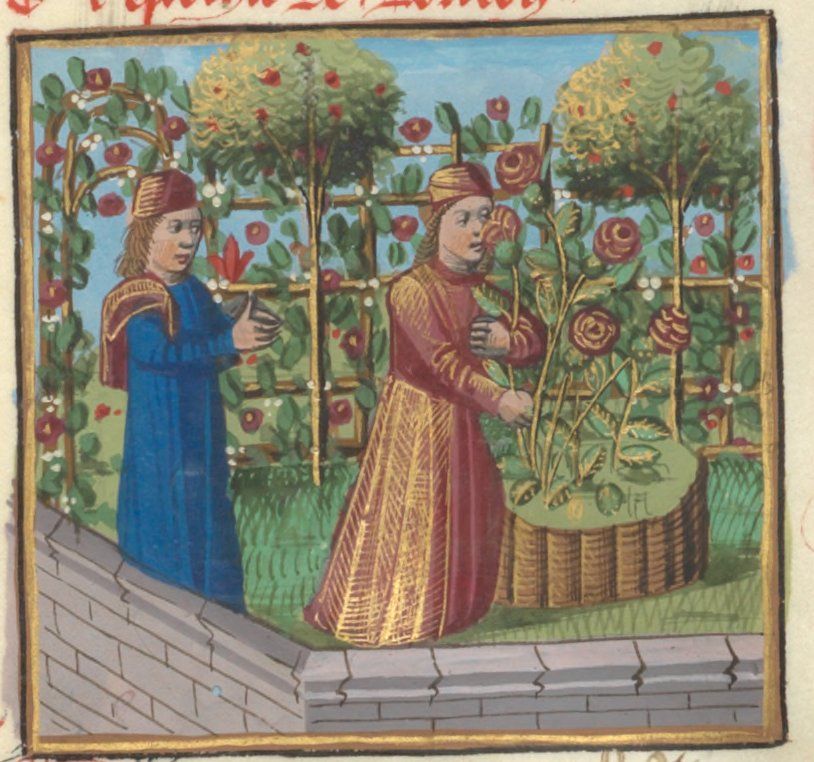
We’re in the year 1230, deep in the Middle Ages. In France, Guillaume de Lorris begins Le Roman de la Rose—a dreamlike allegory written decades before Dante’s Divina Commedia.

A modern edition of the 13th-century allegorical masterpiece on the quest for love.
In those times, people didn’t aspire to fame or influence. They aspired to spiritual perfection, to earning love as a form of inner completion. A true religion of Love.
The story unfolds in a Rose Garden— at the same time symbol of purity, danger, and desire. The narrator must face allegoric figures like “Danger” and “Shame”, and endure to be pierced by five Love’s arrows. This is the price he has to pay to reach the perfect Rose: the reward for a fiercely transformative journey.
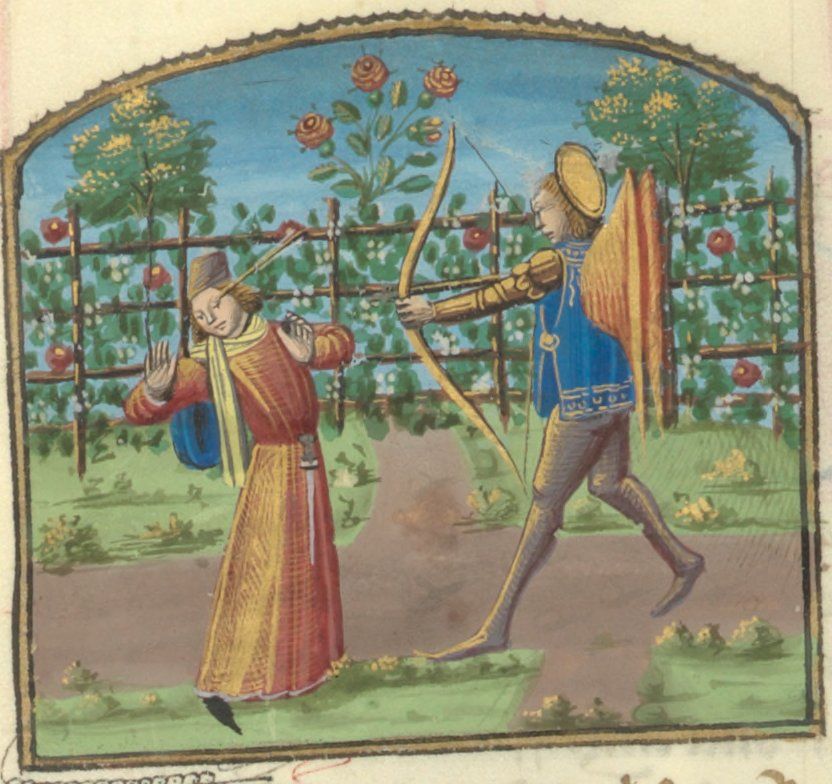
Original medieval illustration depicting Love’s initiation ritual in Le Roman de la Rose. In the novel Roses colors, as much as the garments of the damsel, shift from white to pink, to red and finally gold, marking the passage from purity and innocence to passion and ultimately to spiritual triumph.
Later, Dante would imagine his own mystical Rose, symbol of divine fulfillment—a white rose where the blessed souls are cuddled in Heaven.
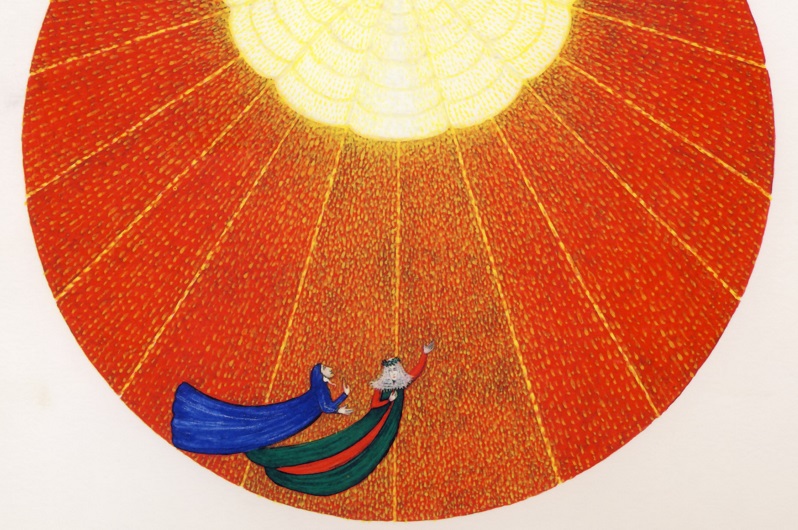
An illuminated vision of the celestial Rose symbolizing spiritual perfection.
And from the 16th century onward, the tradition of the Golden Rose endures: a papal gift symbolizing devotion and piety. Si narra che, just last month, Pope Leo XIV offered a Golden Rose to the Madonna of Harissa in Lebanon—renewing a gesture as ancient as the symbol itself.
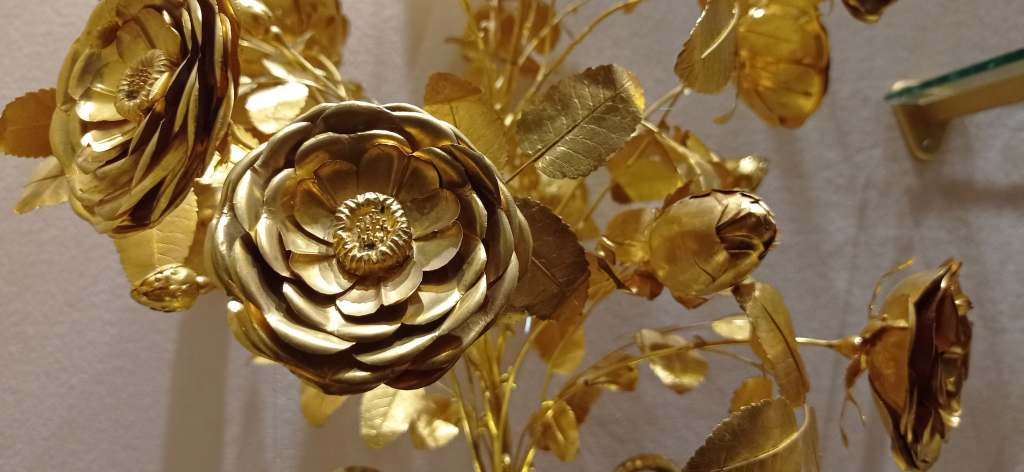
One of the historic papal Golden Roses, a symbol of devotion and spiritual dignity.
 Telling Roses
Leave a comment