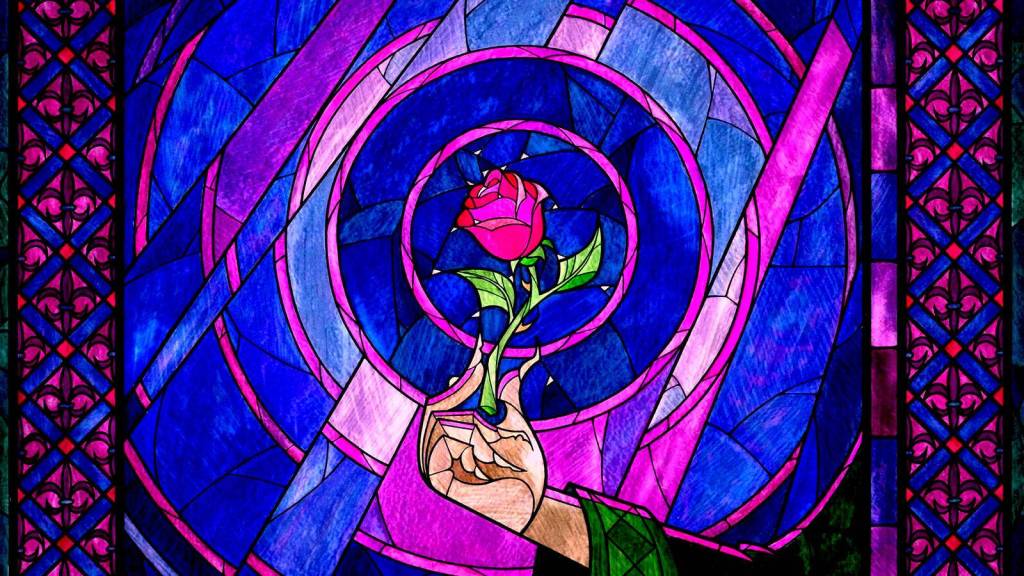
There are two very popular Disney movies where roses play a special symbolic role. You probably know which ones I mean: Beauty and the Beast and Sleeping Beauty.
But let’s take a step back.
Beauty and the Beast and the Rose
The original story of Beauty and the Beast is a little different from the one we know today. It was first published in 1740 by the French novelist Gabrielle-Suzanne Barbot de Villeneuve. Later, Jeanne-Marie Leprince de Beaumont retold a shorter, moralized version in 1756, which became the most widely read and inspired the Disney adaptation.
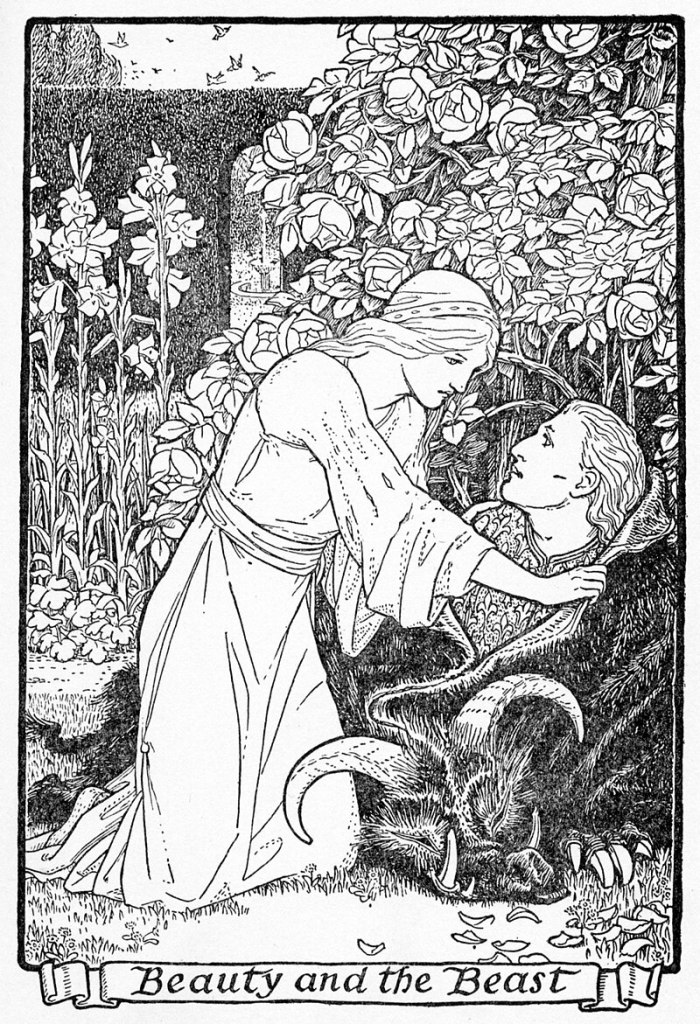
In Villeneuve’s tale, the Rose already has a central role. Beauty (“Belle”) asks her father to bring her a simple rose from his travels. When he plucks one from the Beast’s enchanted garden, the Beast furiously threatens him for stealing his most precious possession. To save his life, Beauty agrees to go live with the Beast in his castle.
Every night, the Beast asks Beauty to marry him, and every night she refuses. In her dreams, however, she sees a handsome young man. A fairy tells her not to be deceived by appearances. Only when the Beast lies dying does Beauty realize her love for him. Her confession breaks the spell, and the Beast is revealed as the very prince she had seen in her dreams.

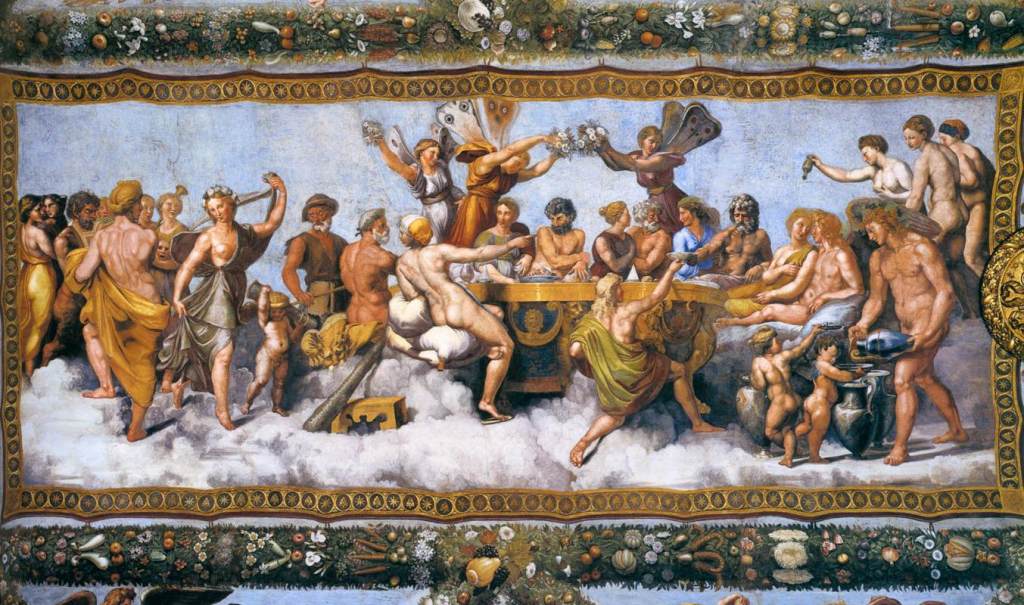
The story draws on older mythological sources, especially Apuleius’s Cupid and Psyche (2nd century CE). In that tale, Psyche is forced to marry an unseen “monster” and may only be with him in the dark. When she finally dares to look, she discovers he is none other than Cupid, the god of love. Roses appear throughout Apuleius’s narrative: Lucius, the tale’s narrator, is transformed into a donkey and restored to human form only when he eats roses. At Psyche and Cupid’s wedding, the Horae (Seasons) scatter roses and flowers to bless their divine union.
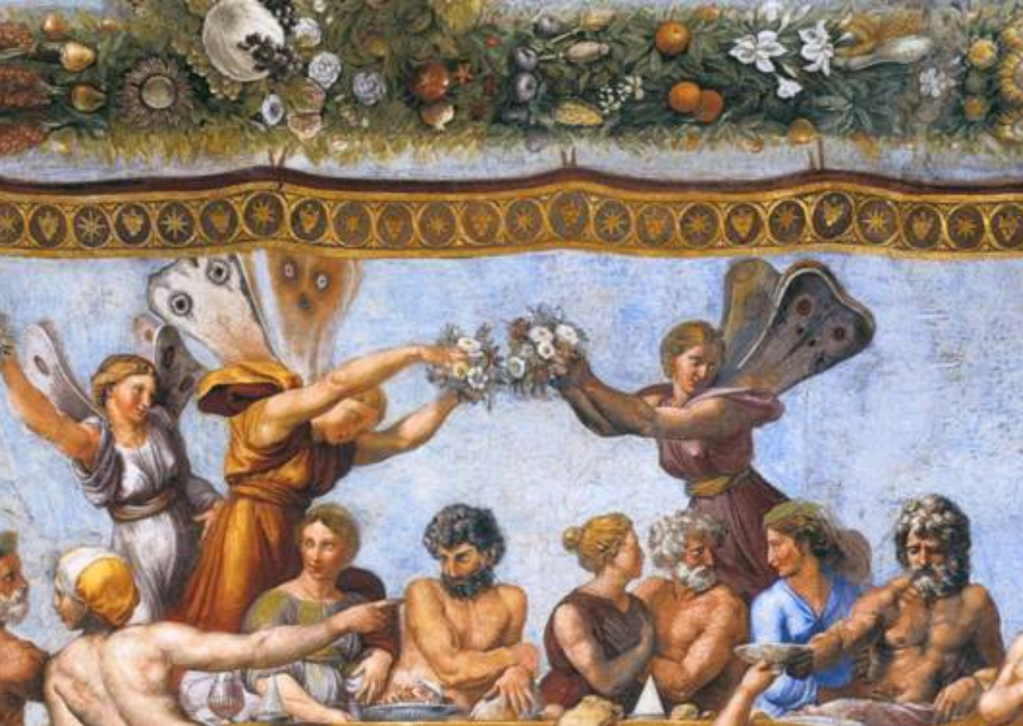
Back to Villeneuve: Belle must pay a high price for her rose. Yet the very flower that nearly killed her father and forced her into the Beast’s castle becomes the symbol of her love, blessing, and happy ending. With its beauty — and its thorns — the Rose remains a symbol of love and pain, two sides of the same coin.
Sleeping Beauty and Briar Rose
The second famous rose-tale is Sleeping Beauty, which the Brothers Grimm published in the 19th century under the title Little Briar Rose (Dornröschen). In this version, the princess is cursed by a wicked fairy to fall into eternal sleep. As the years pass, a hedge of briars and roses grows up around the castle, protecting her until the destined prince arrives. He must cut his way through thorns and brambles to awaken her with a kiss.
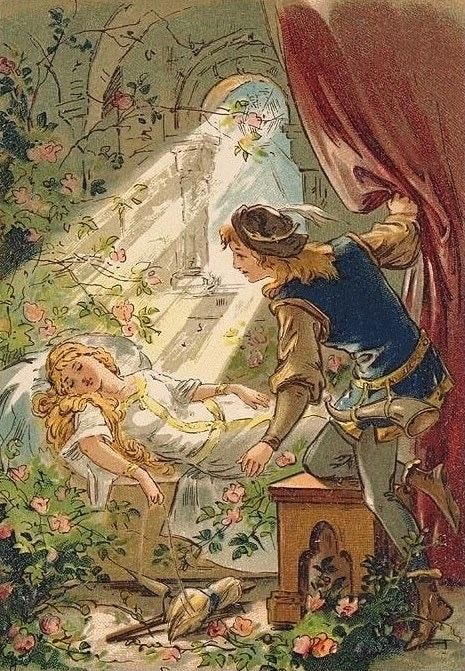
Again, the myth of Psyche hovers in the background: Psyche herself is put into a deathlike sleep when she fails one of Venus’s impossible tasks. Only Cupid can save her, just as the prince saves Briar Rose. And the connection goes even deeper — roses were sacred to Venus, the goddess of love, whose son Cupid is the very messenger of desire. Wherever Cupid and Venus appear in art, roses are never far behind.
Roses, Fairies, and Enchantment
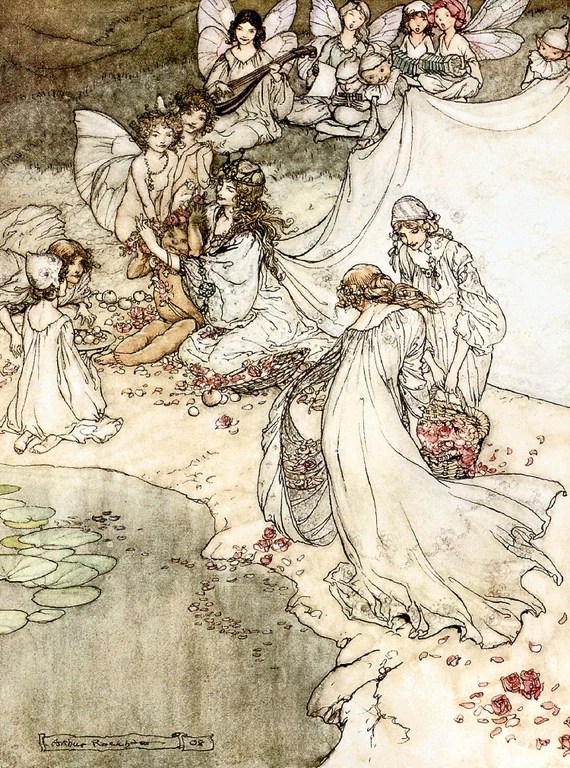
These two universal tales — Beauty and the Beast and Briar Rose — reveal how deeply roses intertwine love and danger, beauty and pain. Yet they are only the beginning. Across folklore, roses appear as offerings to fairies, as magical flowers marking the entrances to fairy realms, and even as the very blossoms from which fairy maidens are born.
In many cultures, roses are not only symbols of love but also thresholds to the supernatural.
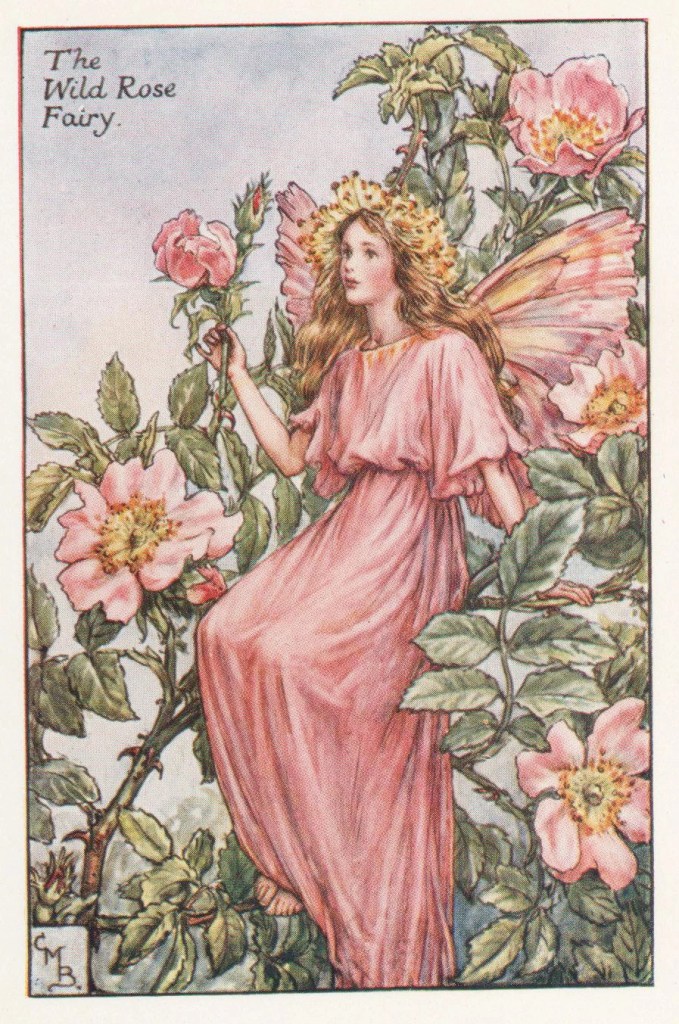
And finally, no reflection on roses and fairytales would be complete without mentioning the beloved Flower Fairies by Cicely Mary Barker. Among them are the Rose Fairy and the Wild Rose Fairy, perhaps the most enchanting of her creations. Published in the early 20th century but rooted in Victorian sensibilities, Barker’s illustrations gave delicate form to the idea that every flower has its own spirit. Roses, in particular, were cherished in the Victorian age not only as timeless emblems of love but also as symbols of mystery, enchantment, and the unseen world of supernatural beings. Through Barker’s fairies, the rose remains what it has always been in folklore and myth: a blossom at the threshold between beauty and otherworldliness.
 Telling Roses
Leave a comment