
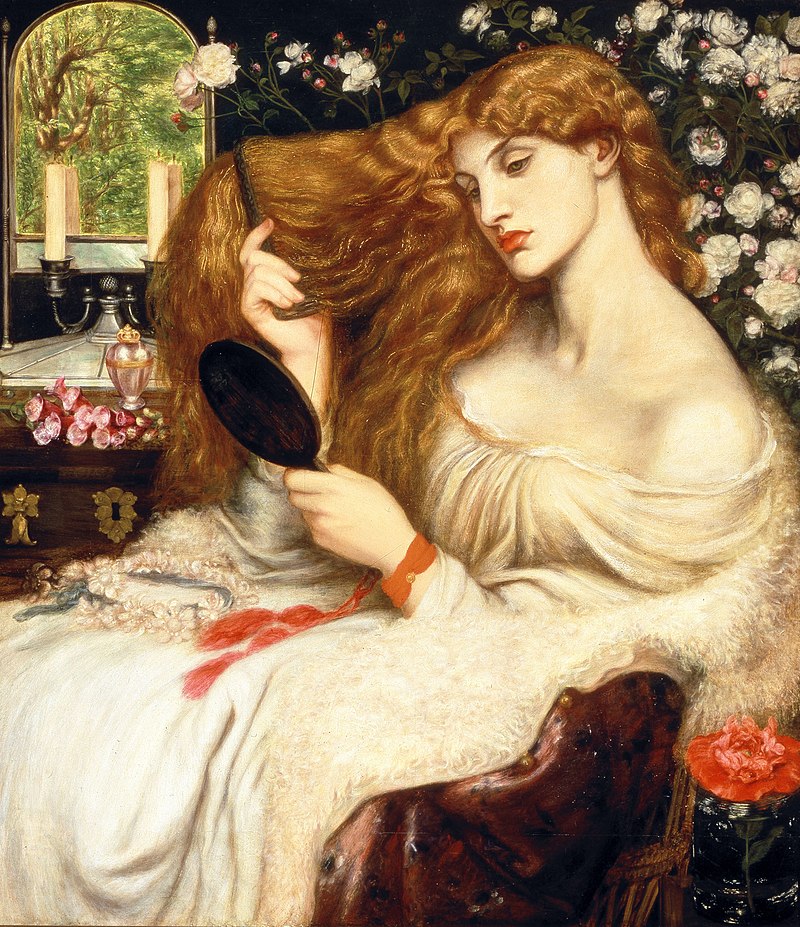
The rose garden is an image we all carry in our minds: roses intertwining above our heads, roses rising tall and proud from the ground, showing off their palette of colors—white, lilac, pink, peach, red, orange, yellow.
A recent example can be found in the romantic image of Taylor Swift, accepting the promise of eternal love in a classical rose garden, complete with stone amphorae overflowing with roses. An image as vintage as the ring she now wears on her finger. And yet—for many of us—a dream.
So perhaps the rose garden is having a revival?
But let’s take a few steps back. When was the rose garden born?
We must return to ancient Greece, and then to Rome. If the Greeks were masters of philosophy, they also knew how to contemplate nature. Their gardens were not only functional spaces, but also contemplative ones: the pure pleasure of beauty for beauty’s sake.
They designed the first gardens with not only “useful” plants but also decorative flowers such as violets and roses.
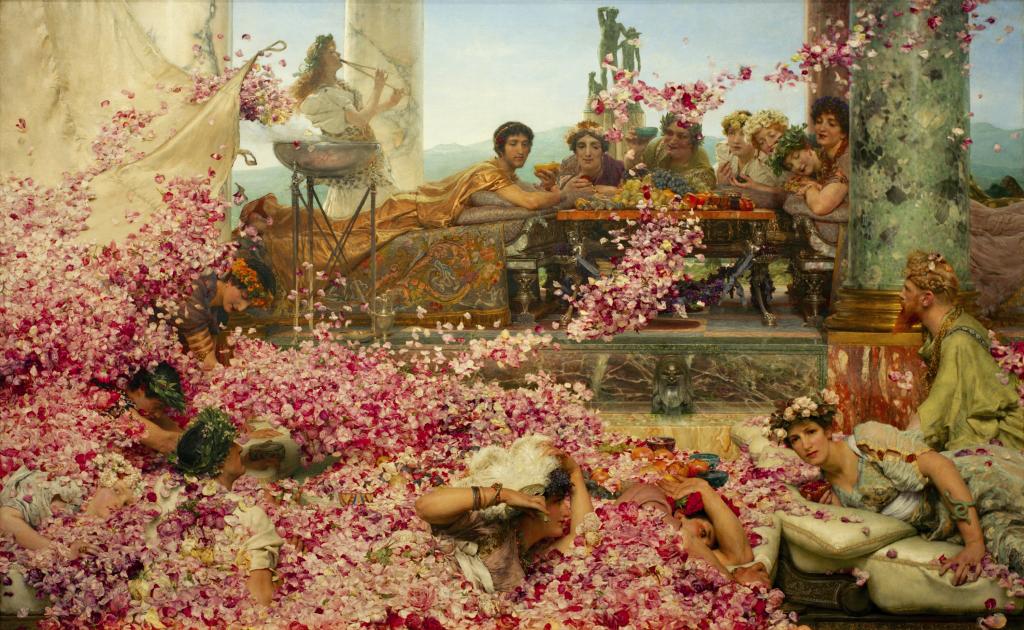
The Romans brought this concept to a new level of indulgence. Otium and pleasure flourished among rose petals in the gardens where the Roman elite gathered. The rose began to embody pleasure and desire. Sacred to Venus (Aphrodite), the rose was the goddess’s flower, linked with Cupid, and became the symbol of sensuality, beauty, and love.
Yet the Romans were not only devoted to otium. There were also intrigues and funeral rites marking the passage to another world.
Here too we find roses. The famous pact sub rosa meant that a carved rose on a door signaled that what was said in that room was to remain secret.
On tombs, Romans scattered rose petals as a rite of transformation and remembrance.
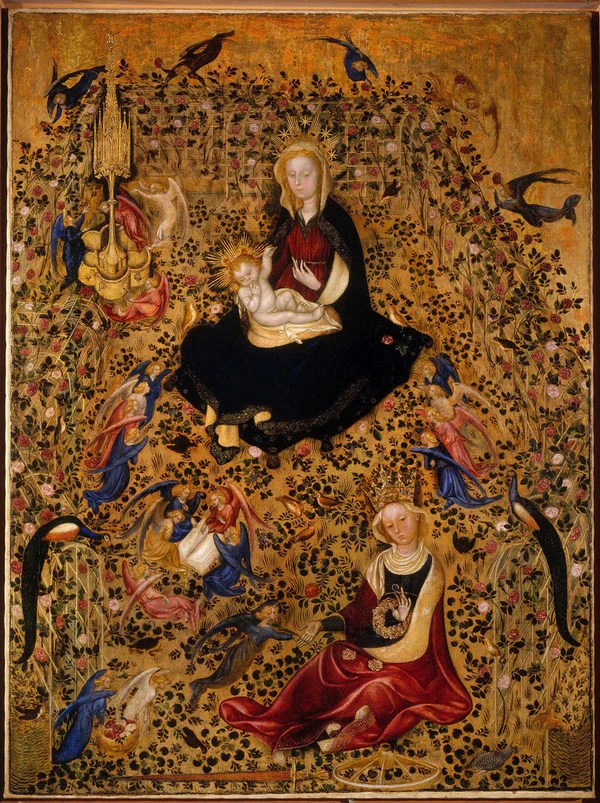
With Christianity, the rose took on new meanings. In the Middle Ages, the Mystic Rose garden appears in various artworks.
Particularly fascinating is Michelino da Besozzo’s Madonna in Roseto (ca. 1420): the Virgin appears both above, surrounded by angels and encased in a lush rose garden, and below, equally enveloped in roses. A mirrored image: Mary in heaven and on earth, both linked by the rose garden.
And let us not forget the “rosary”: literally a crown of roses offered to Mary, each rose a prayer.
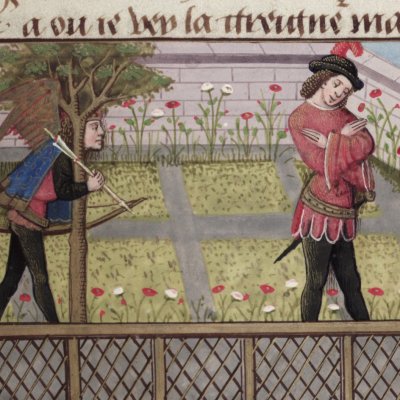
In medieval culture, the rose garden also belonged to courtly literature. The rose became an allegory of the beloved, of desire, of perfection in love. Love was imagined as a “quest”: the Knight must prove himself worthy of the Lady before achieving the sublime union. Here we find the Roman de la Rose (13th c.), an allegorical journey toward love.
Then we come to my favorite part: the modern era, Art Nouveau, the celebration of beauty and harmony with nature, the revival of medieval motifs in an idealized form—think of the Pre-Raphaelites, William Morris, and others.
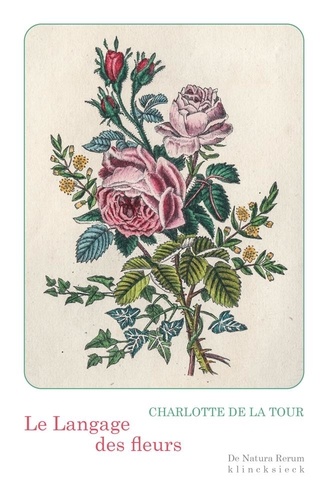
The rose became ornament: abundant in Victorian portraits, where women were adorned with roses, or in revived symbolic motifs. But what fascinates me most is how women, while the decorative arts were still dominated by men, created their own secret floral code. Thus was born the Language of Flowers, popularized by Charlotte de La Tour. In an age when emotions were veiled by discretion, women—confined in corsets and strict social roles—constructed a private world of meanings. They assigned messages to each rose, drawing on mythology, poetry, art, and botany: the yellow rose for jealousy, the white rose for silence or purity, the musk rose for grace, and so on.
So, across centuries and cultures, the rose garden has carried many meanings. Which symbolic rose garden, then, did Taylor Swift choose for her portrait?
- A voluptuous garden of Roman otium?
- A mystic rose garden of spiritual perfection from Christian iconography?
- A Victorian garden, ornamental and esoteric?
I leave the question to you, dear readers. I’ve shared my view—now it’s your turn!
Discover more on Rosetos in our video episode on @Tellingroses
 Telling Roses
Leave a comment