
It’s probably already clear to readers—if you’ve seen the first couple of posts so far—that Telling Roses is dedicated to the symbolism of roses, rather than their botanical classification or uses in gardening and decoration. Those aspects, while fascinating, are not our focus.
However, a basic botanical distinction is essential if we want to read and interpret roses symbolically, especially in historical contexts like Renaissance art. And that starts with one key concept: the difference between old roses and modern roses.
🌸 What Are Old Roses?
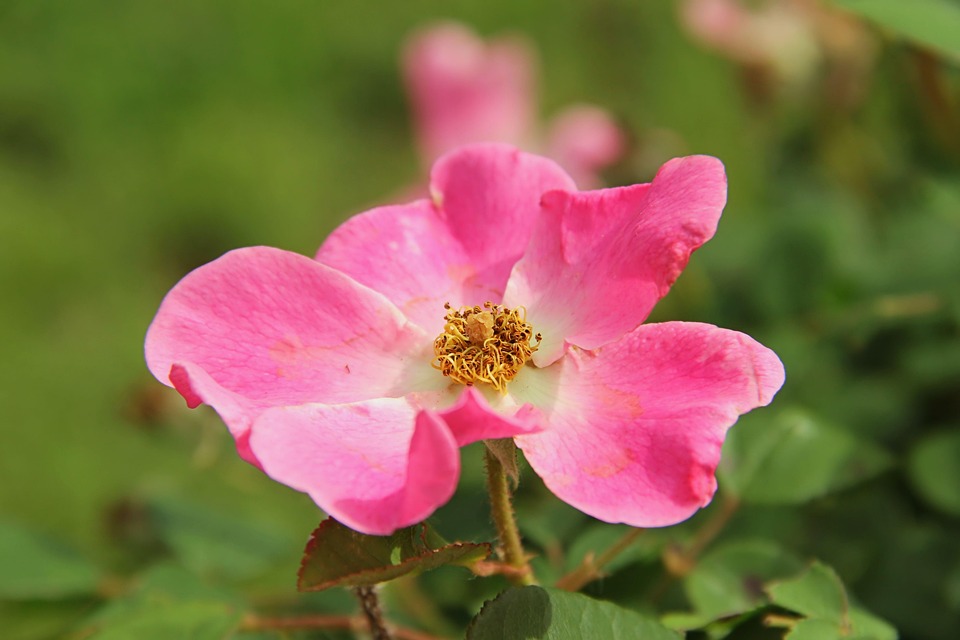
The term “old roses” refers to all cultivated rose varieties that existed before 1867. That year marks the introduction of the first hybrid tea rose—considered the beginning of the modern rose era.
To put things in perspective, the story of roses stretches back an estimated 35 million years, and more than 3,000 varieties (some sources say over 4,000) have been classified. The heritage of the rose is vast and deeply layered.
But why does this matter? Because old roses often look quite different from the classic, full, spiraled blooms we associate with Valentine’s Day or florists’ windows. Some have only four or five petals, with visible stamens and simpler forms—closer to wild species than cultivated hybrids.
Seeing Old Roses in Botticelli’s Paintings
If you’re, like me, a fan of Sandro Botticelli—the celebrated Italian Renaissance painter whose most iconic works are housed in the Uffizi Gallery in Florence—this botanical distinction can enhance your viewing experience.
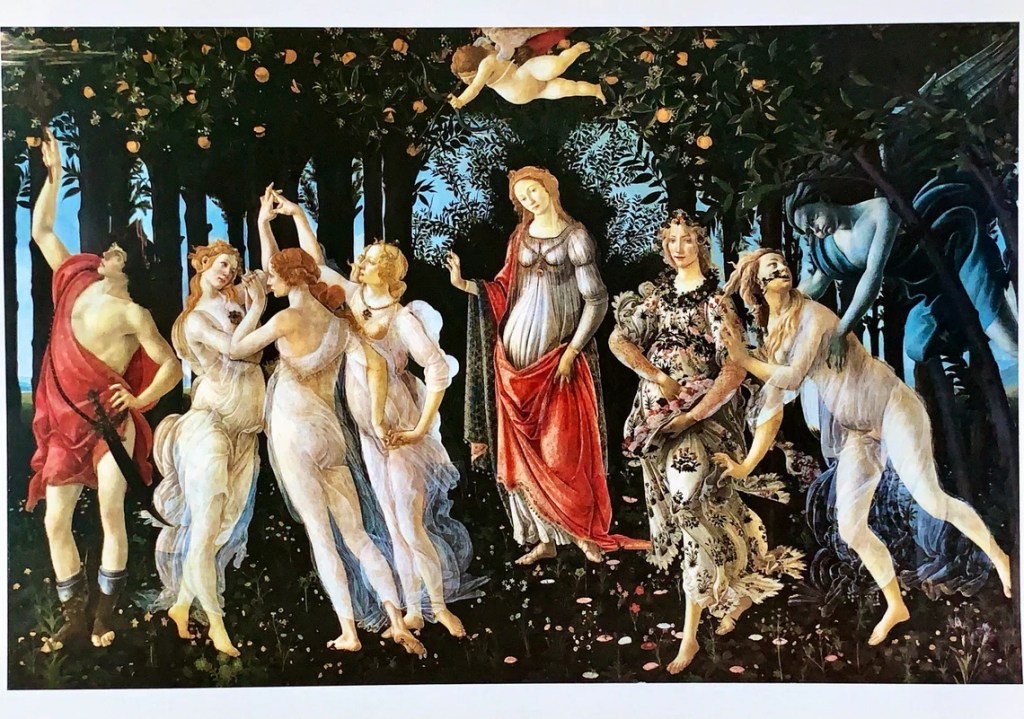
Let’s start with one of his masterpieces: La Primavera (Spring).
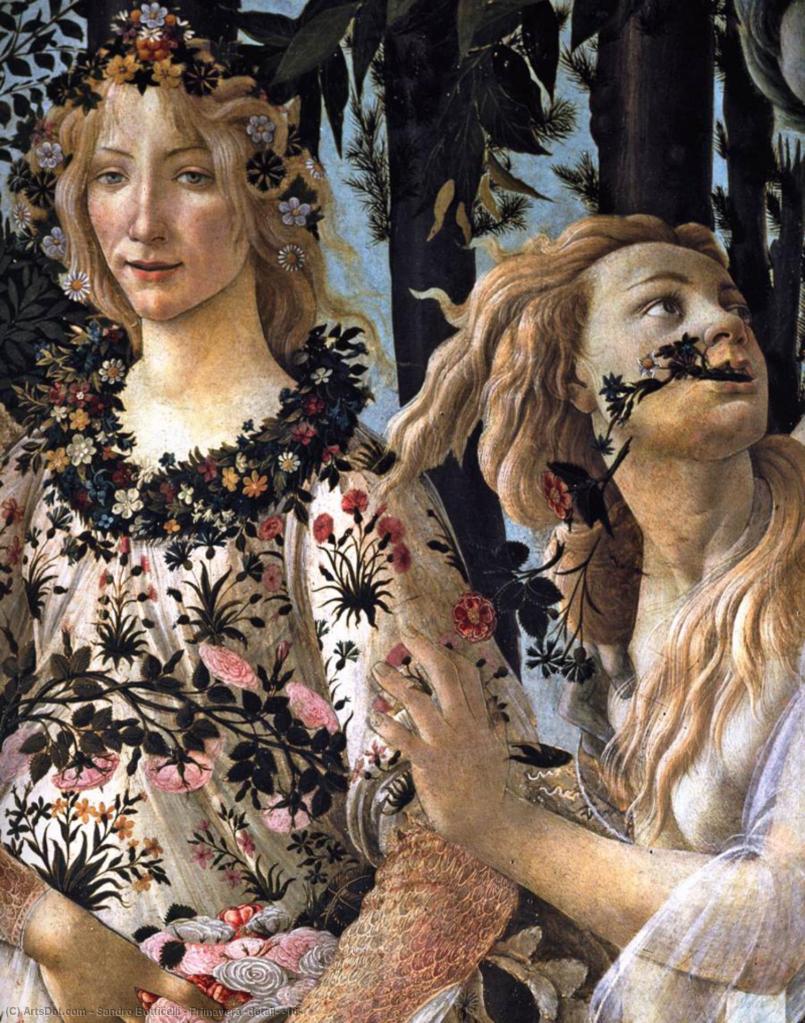
In this allegorical painting, the figure of Spring is represented as a pregnant woman, richly adorned with flowers of every kind. Among them, of course, are roses—delicate, pink and white, circling her belly. This isn’t just decorative: the fertility of Spring is echoed in the flourishing life within her, and roses crown her like a blessing of beauty and abundance.
Some of these roses resemble modern varieties, but many are less structured, open-faced, and appear closer to old roses in form—simple, elegant, symbolic.
The Birth of Venus: Roses in Divine Light
Let’s now return to another iconic painting: The Birth of Venus.
We’ve explored in previous posts that the rose is Venus’ sacred flower, and here we see them again—falling gently around the newly born goddess, blown by the wind as she emerges from the sea upon a shell.

Can you recognize these roses as modern roses? Most likely not. They’re looser, more natural, their centers open with visible pistils. But make no mistake: they are roses, just not the kind you might find in a florist’s shop today—they’re old roses, captured in a divine moment.
Identifying Botticelli’s Roses: A Botanical Guess
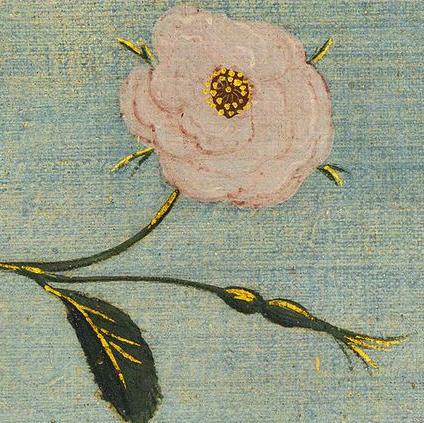
It’s hard to pinpoint the exact species Botticelli might have been referencing, and a trained botanist would likely do a better job than I could. Still, we can make educated guesses based on appearance.
These painted roses are:
- Pink and delicate
- Open-faced, with visible centers
- Clearly have more than five petals—but far fewer than modern hybrids
One artist who helps us visualize these types is Pierre-Joseph Redouté, the famous botanical illustrator. Some of his drawings seem to echo Botticelli’s roses:
My selection:
- Rosa pimpinellifolia rubra
- Rosa venteniana
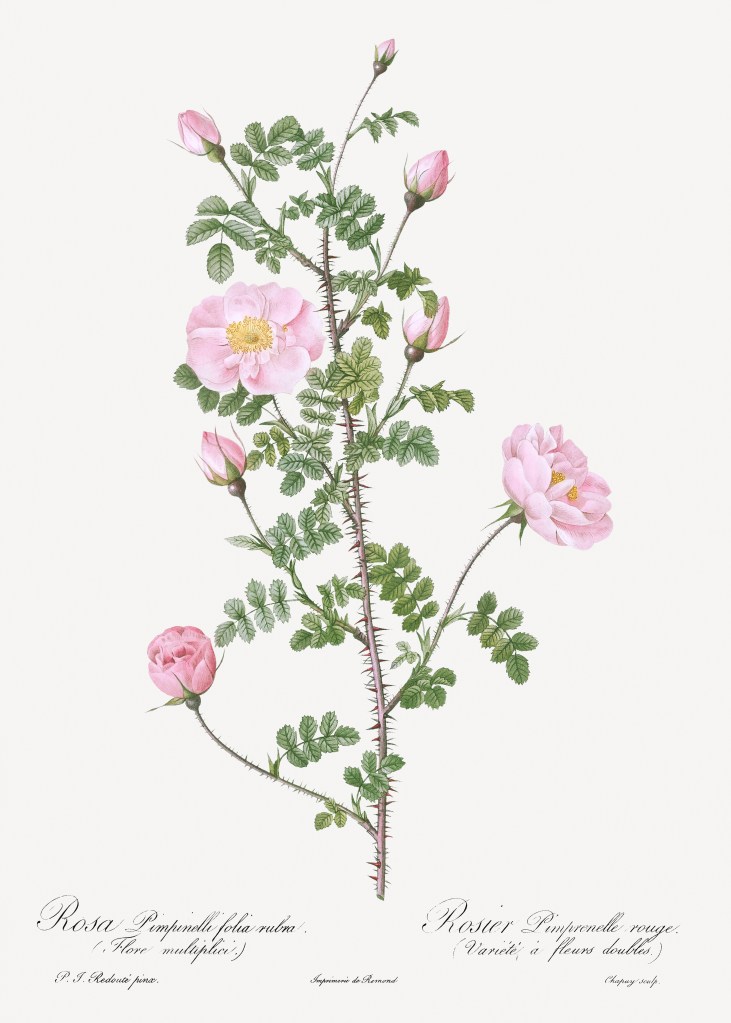
Could Botticelli have had access to these varieties—or wild ancestors of them? It’s possible.
Join the conversation
Do you have a better guess about the type of rose Botticelli might have used as a model?
Have you noticed roses in other works of art that feel symbolically rich?
Leave a comment—I’d love to hear your thoughts and continue the conversation.
 Telling Roses
Leave a comment