
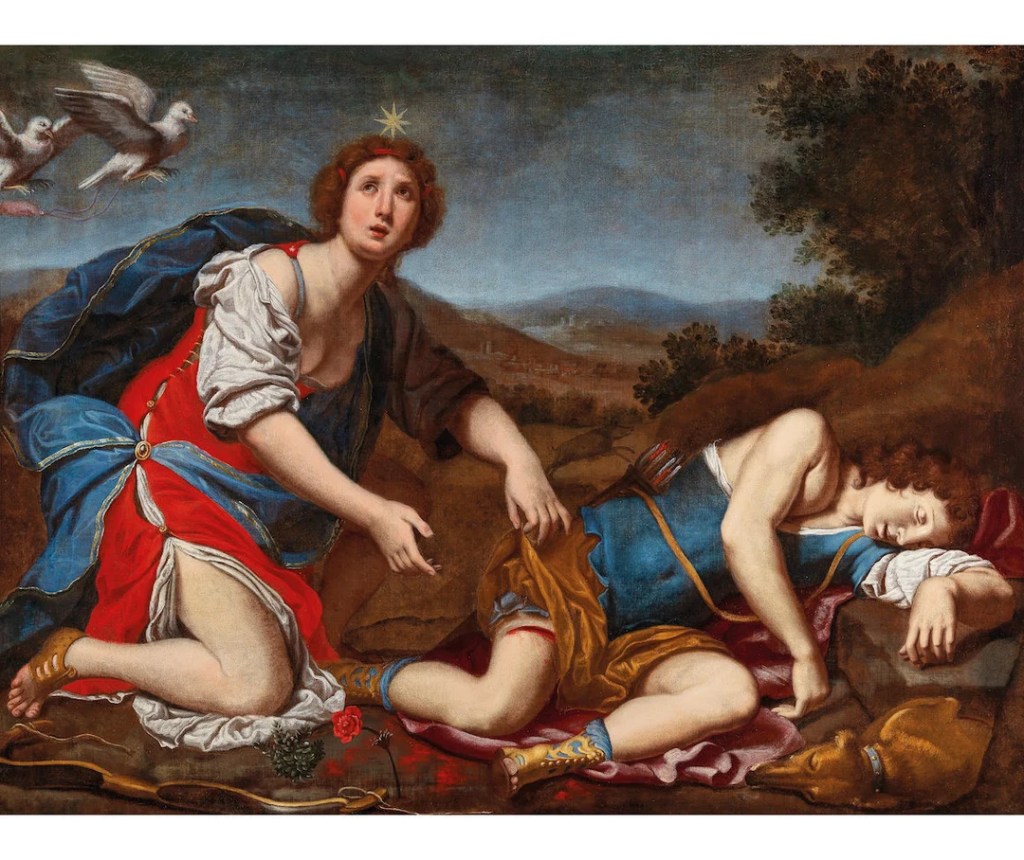
As mentioned in the opening post, Greek and Roman mythology claim that roses originated from Venus’ tears. And thus, the rose is the sacred flower of the Goddess. So far so good—the Goddess of Goddesses gets the queen of flowers; the most beautiful among them gets the most beautiful flower.
The Mythological Origin of Red Roses
But there is always a darker and sadder side to the story. Medieval Byzantine sources also place the red rose in Venus’ story, yet out of tragic circumstances.
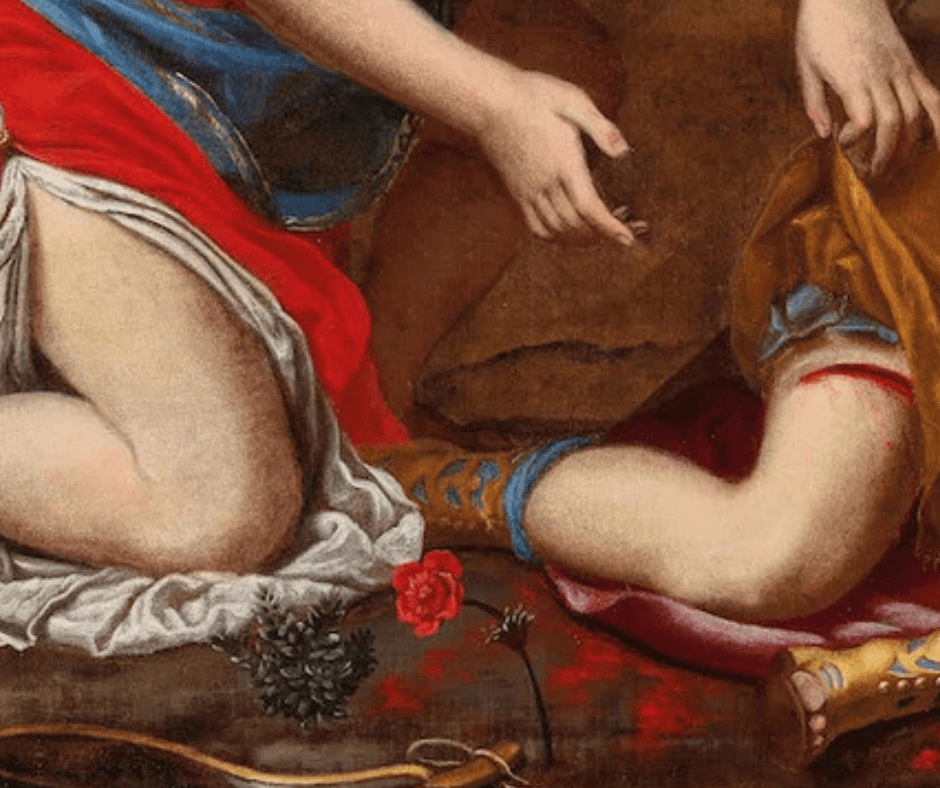
“Venus, running through white roses among thorns, is wounded on the foot by a thorn and stains the flower with her blood. The rose, once white, becomes red.”
(Geoponica, 4th–10th century)
The red rose is therefore born from the blood of Venus, mourning the loss of her beloved Adonis, staining the originally white and candid rose.
Other sources say that it is the blood of Adonis, attacked and killed by a wild boar, that stains Venus’ roses. In the end, the myth turns the red rose into a symbol of love and loss, of beauty tinged with suffering.
From Love to Pain: The Dual Meaning of Red Roses
That red roses are today a symbol of love and passion is widely known. Yet the leap from passion to pain seems short. The danger of love is that losing it can cause profound sorrow.
Even Christian symbolism adopted the red rose—this time as a reference to Jesus Christ, where the rose stands for sacrifice, redemption, and divine love. Through pain—or the danger of it—we reach love. Here, red roses become more human, less godlike, and more understandable to mortals.
Practical Magic and the Language of Flowers
Now that I’m done with ancient references, let me bring in one of my favorite films: Practical Magic (1998), starring Sandra Bullock and Nicole Kidman. The Owens sisters live in a Victorian mansion in Massachusetts. Branded as “hexes” by their neighbors, they and their aunts are both feared and fascinating.
Blood appears in one of the first scenes—though subtly. When the aunts agree to help a desperate girl cast a love spell, they produce a white dove. To activate the magic, the girl must stab it in the heart while it’s still alive. Blood. Love. Sacrifice. The symbols endure.
Roses in Practical Magic: Costume as Symbol
While the original novel features lilies, the movie leans heavily into rose symbolism. Consider these details:
- Sally Owens wears a white T-shirt with blue roses when she meets her first love.
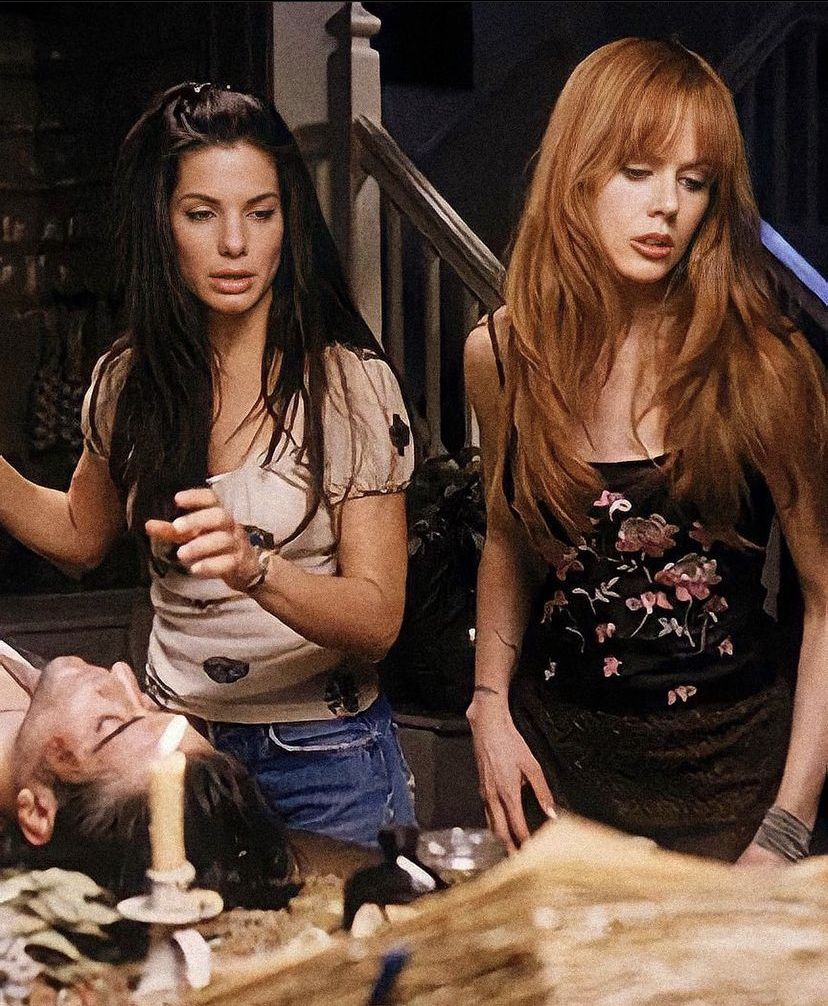
- Gillian wears black with pink embroidered roses while resurrecting her dangerous boyfriend.
- Sally again wears white, this time with black roses, during a black magic ritual.
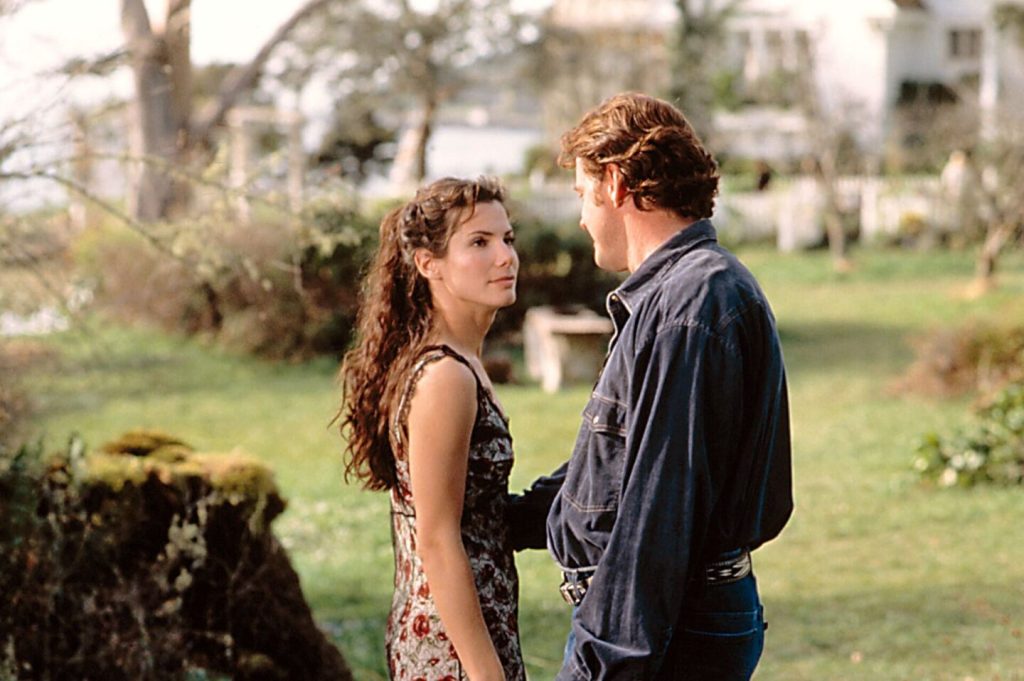
- At the end, she wears a flowing dress covered in burgundy roses as she falls for the detective.
Each rose color matches her emotional and magical journey.

Red Roses and Death in the Garden
And then come the red roses—with the most dramatic role in the film.
It is beneath red rose bushes and brambles that the sisters bury the body of Gillian’s ex-boyfriend, Jimmy. From that point, the roses grow wild and uncontrollably. Sally’s daughter, gifted with second sight, sees Jimmy’s ghost among the roses. Just like in the book—where lilies reveal him—it’s the child who senses the haunting.
Sally, in an attempt to break free from the curse, is caught cutting the roses by the detective searching for the missing man.
Hidden Rose Meanings in Costume and Plot
Even the blue roses worn by Sally have a deeper meaning. In flower symbolism, blue roses represent the impossible. Her romance with the grocery store guy, although sweet, is doomed. He dies—cursed like all Owens lovers—making the blue rose prophecy come true.
Gillian’s pink rose blouse could represent her conflicted relationship—torn between love and pain. Though once romantic and pure, her love for Jimmy turns toxic. She has to let go and rebuild.
Final thoughts for now on Rose symbolism
So, let’s leave it there—for now. There’s so much more to say about roses in myth, literature, and pop culture. From ancient sacrifice to modern storytelling, red roses remain powerful symbols of love, loss, beauty, and transformation.
Discover more on:
 Telling Roses
Leave a comment